Wedding Planning
Wedding Planning Checklist 2026: Every Step, In Order
The 2026 wedding planning checklist for Australian couples: from guest list to 'I do', every step in order with realistic timing.
By Elise Schofield
· 9 min read
If you’ve ever thought, “I wish someone would just tell me what to do and in what order,” this is that.
This wedding day planning checklist walks you through simple steps to organise your day from “we’re engaged” to “we’re married”, and shows where a digital planner like WedBuild fits in to keep your whole wedding in one place.
For a big-picture overview of how AI ties into your planning, you can also read AI Wedding Planning 101: How WedBuild Becomes Your Digital Wedding Planner
1. Start with Your Guest List
The guest list quietly drives almost everything:
- Your budget
- Your venue options
- Your food and drink costs
Start with an A list (people you absolutely want there) and a B list (nice-to-have additions if budget and space allow).
If that already feels overwhelming, you're not alone. Vogue notes in its guide to how to create a wedding guest list that many couples find this one of the most emotional parts of planning and recommends beginning with the people who matter most before expanding outward.
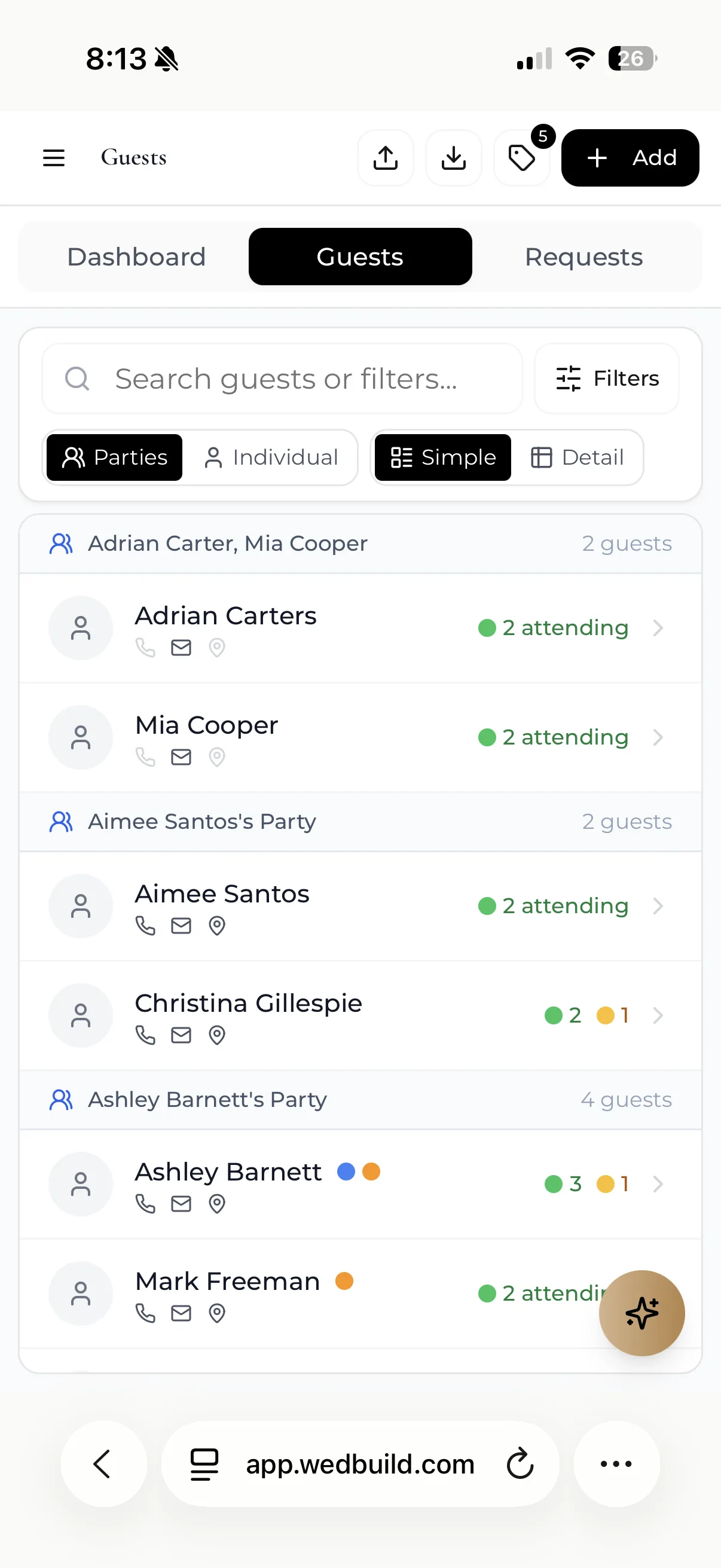
Even at this early stage, putting your guest names into something structured (rather than a random notes app) makes a big difference. WedBuild is being designed as that central place: one list you can refine, update and eventually connect to RSVPs, seating and more.
2. Set Your Budget
Once you roughly know how many people you’re inviting, you can set a realistic budget. Most major costs scale with guest numbers, so it makes sense to decide on those together.
A simple way to start:
- Decide your overall budget
- Allocate rough amounts to venue, food, drinks, photography, music, styling, outfits, etc.
- Leave a little buffer for things you’ll only discover later (there are always a few)
As Vogue points out in its wedding budget planning guide, unexpected costs almost always pop up, which is why building in flexibility early can make the whole process feel less stressful.
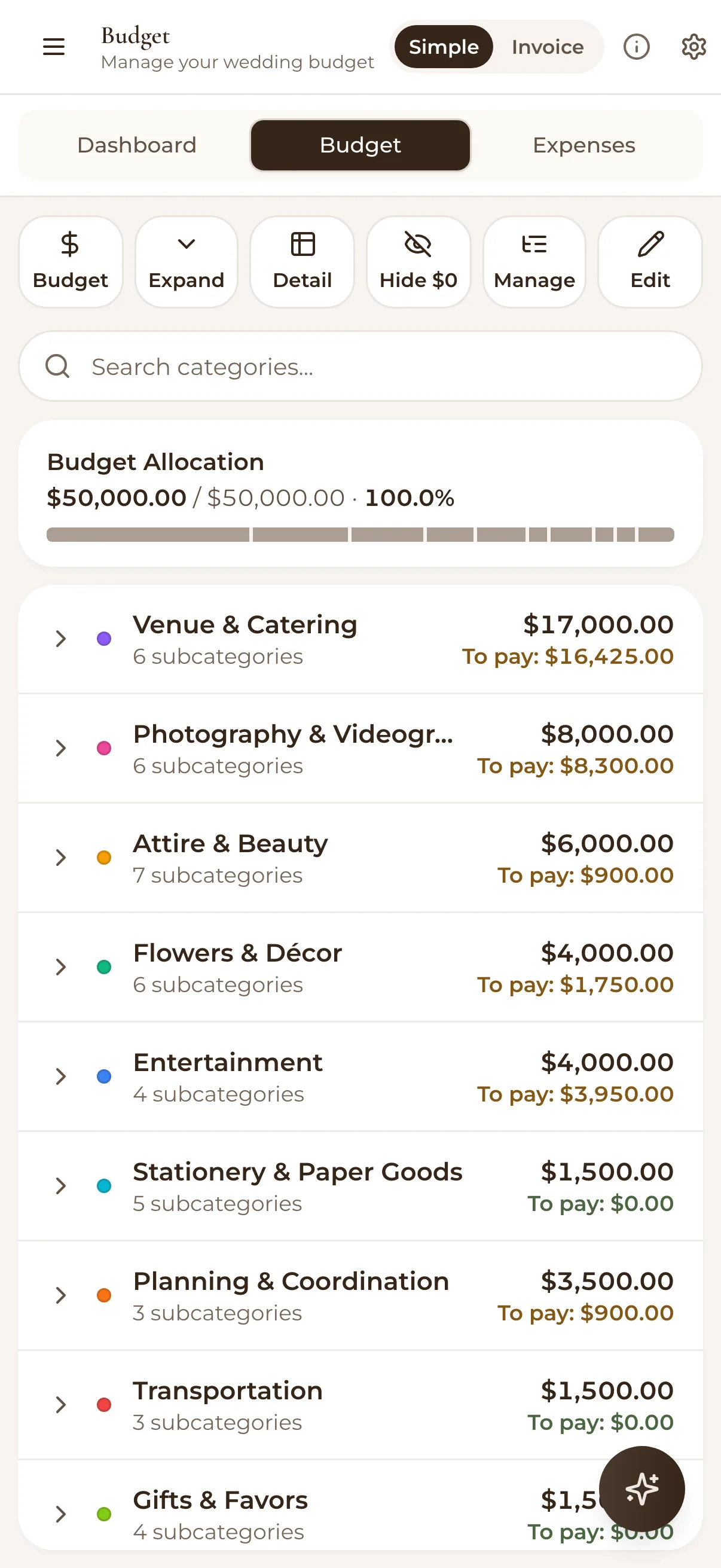
WedBuild is being built with an accountant-designed budgeting structure in mind, something that turns “approx vibes” into real numbers and keeps everything in one clear picture.
3. Lock In Your Date and Venue
Next, secure the two big pillars your day rests on:
- Ceremony date, time and location
- Reception date, time and location (if different)
Once these are booked, you have a framework for everything else: your invitations, website content, travel info for guests, and your run sheet. In WedBuild, this kind of core information is intended to sit at the heart of your planning, feeding into your timeline, guest communications and the rest.
4. Choose Your Style and Overall Vibe
Now for something more fun: how you want the day to look and feel.
Think about:
- Formal vs relaxed
- Daytime vs evening
- Colour palette
- Setting (coastal, winery, rooftop, backyard, garden, city, etc.)
This doesn’t need to be locked in at a hyper-detailed level, but having a clear direction will help with everything from outfits and flowers to your website design and stationery.
If you're still figuring out your aesthetic, don't stress. Your celebration doesn't have to fit into one perfect box, and the style usually settles itself once the venue is locked in.
WedBuild is being created with modern, flexible styling in mind so that your digital presence can actually match the mood you’re going for in real life.
5. Book Your “Power Five”
Once date, venue and budget are roughly in order, it’s time to start securing your key suppliers. For most couples, the “power five” look something like:
- Photographer (and videographer if you want one)
- Caterer / venue catering
- Celebrant or officiant
- Music (DJ or band)
- Planner / coordinator or stylist (if you’re using one)
These vendors often book out well in advance, especially on popular dates. A central planner like WedBuild is being designed to help you track who you’ve enquired with, who you’ve booked and what remains on your list, instead of scattering that info across emails and sticky notes.
6. Build Your Wedding Website and Info Hub
At some point in this early-to-middle phase, it’s worth setting up your wedding website.
Your site can include:
- The basic who/what/where/when
- Travel and accommodation information
- Dress code
- Your story
- RSVP details
WedBuild is being built to act as both your website and your planning home, so that what your guests see (RSVP forms, event details) and what you see (guest list, responses, notes) are connected rather than separate worlds.
7. Start a Real Checklist (and Use It)
You don’t need a 400-item list to begin with, but you do need something more reliable than “we’ll remember”.
Your checklist should cover:
- Admin (legal forms, payments, contracts)
- Vendors (booking, confirming, final details)
- Styling and decor
- Clothing, fittings and accessories
- Transport and logistics
- Little things like speeches, music choices and pack-down
WedBuild is being designed with a planning checklist at its core, supported by AI to help remind you of things couples commonly miss and to keep your tasks realistic and ordered.
8. Plan the Flow of the Day
A clear, simple run sheet makes the day smoother for everyone: you, your guests, your vendors and your wedding party.
Think about:
- When guests should arrive
- Ceremony timing
- Travel between locations (if any)
- Speeches, first dance, cake cutting
- When you want formalities to end and “party” to begin
Tools like WedBuild aim to help you map this out alongside your other planning, so you’re not creating twelve different versions in twelve different documents.
9. Organise Seating and Final Details
Closer to the day, once RSVPs are in, you’ll move onto:
- Final guest list
- Seating (who sits where and with whom)
- Place cards and/or table numbers
- Final dietary lists for your caterer
- Final confirmations with all vendors
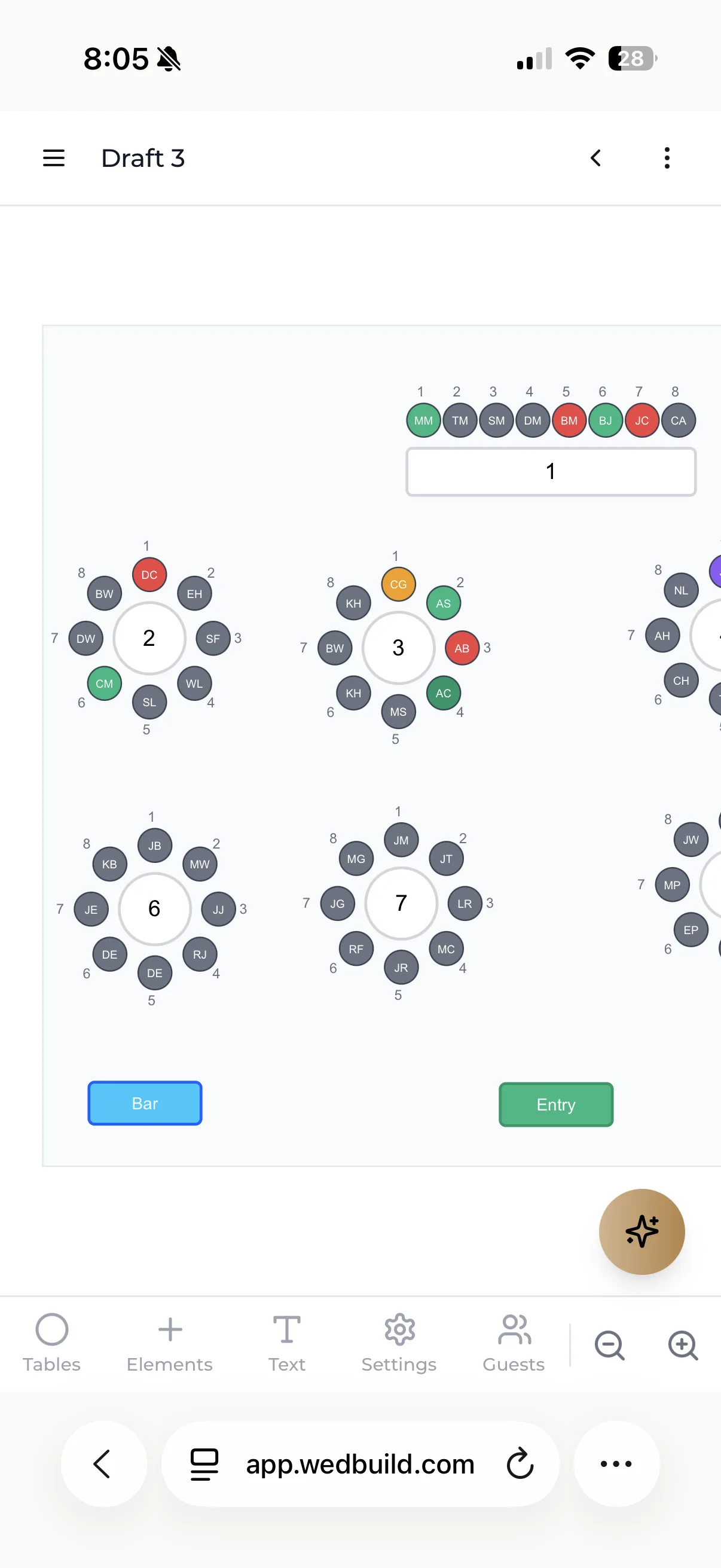
This is usually where couples end up surrounded by scraps of paper and last-minute changes. WedBuild is being built specifically to avoid that moment. The idea is one source of truth for guests and tables that you can adjust as needed without starting from scratch each time.
10. Confirm, Hand Over, and Breathe
The final stretch is about confirming and handing over:
- Send final details and PDFs/run sheets to your vendors
- Make sure someone besides you knows the plan (coordinator, trusted friend or family member)
- Decide what actually needs your attention on the day and what can be delegated
The whole purpose of a digital planning home like WedBuild is to get you to this point without feeling like you’re constantly chasing information. Everything you’ve decided along the way feeds into one clear plan you can share, so you can finally step back and enjoy what the whole thing is actually for.
You don’t need to love spreadsheets, be hyper-organised or treat your wedding like a project plan. But having a simple order to follow and one place to keep it all makes a huge difference. That’s exactly the gap WedBuild fills: one modern home for all the moving parts of your day, so you can spend less time wrestling logistics and more time being excited to get married! If you want the background before the checklist (the legal deadlines, the real costs and the order to decide in), start with how to plan a wedding in Australia.
How WedBuild Runs the Checklist For You
A checklist you have to maintain is just another job. The version that survives contact with a real engagement is the one that already knows your date and moves as the rest of the plan moves.
WedBuild builds the wedding checklist from your wedding date, so every task arrives with a real due date rather than a vague twelve-months-out. Tasks connect to the thing they are about (final numbers link to the guest list, a vendor balance links to the budget), so ticking something off does not mean re-entering it somewhere else. You can add your own tasks, and the dashboard surfaces what is genuinely urgent this week instead of showing you all two hundred at once.
The practical details: the checklist is in the free plan alongside the wedding website, online RSVPs and guest list, for weddings up to 50 guests. Standard (A$99, paid once) removes the guest limit and adds the budget planner and drag-and-drop seating. Pro (A$199, paid once) adds the visual room designer, QR Find My Seat and vendor comparison. One-time payments, not subscriptions.
Keep reading
When you're ready to dig into specific steps, these guides cover the parts most couples find hardest. build your wedding guest list (without going crazy), see the average wedding cost in Sydney 2026, learn the hidden wedding costs couples always forget, and create your wedding day timeline.
Before you go
Frequently asked questions
How early should I start wedding planning?
12-18 months out for popular AU venues with Saturday dates. 6-12 months works for off-peak dates, smaller weddings, or weekday celebrations. Below 6 months gets stressful unless your scope is small.
What's the most important first step in wedding planning?
Setting a real total budget. The venue, guest count, and aesthetic all flow downstream of the budget. Couples who set the venue first and the budget second consistently overspend.
Do I need a wedding planner?
For weddings over 80 guests with multiple vendors, a day-of coordinator (~$1,500-$2,500) pays for itself in stress avoided. Full-service planners are useful for couples planning from afar or with complex weddings. For smaller weddings, a great venue coordinator and a planning app is enough.
What are the most commonly forgotten tasks?
Marriage licence and Notice of Intended Marriage (must be lodged at least one month before the wedding in Australia), vendor meals at the reception, postage on invitations, and the morning-of getting-dressed timeline.
How do we share planning tasks across the wedding party?
A shared planning tool with task assignment is the easiest path. WedBuild's checklist supports priority, due dates, and assignments to your partner or wedding party. Email and group chats end in confusion.
Can we plan a wedding in 6 months?
Yes, with constraints. Popular venues will be booked, so you'll work with what's available. Photographers and bands need to be booked first. The smaller the guest count, the easier 6-month planning gets.
Is there a free wedding planning checklist app?
WedBuild's free plan includes the checklist, built from your wedding date, for weddings up to 50 guests, along with the wedding website, online RSVPs and guest list. Above 50 guests, Standard is A$99 paid once rather than a monthly subscription.
When should we start using a wedding checklist?
As soon as you have a date, even a rough one. The first three months set the things everything else depends on (guest count, budget and venue), and those are the decisions that are expensive to reverse later. A checklist built from your date will tell you straight away which of them is already overdue.

Written by
Elise Schofield
Co-founder, WedBuild
Elise is the co-founder of WedBuild and a newlywed who knows exactly what it’s like to be buried in wedding spreadsheets. Frustrated with outdated websites and messy planning tools, she helped build WedBuild so couples can plan their weddings with less chaos and more “this actually feels fun".