Guest List & RSVPs, Without Going Crazy
Build Your Wedding Guest List (Without Going Crazy)
How to build a wedding guest list without going crazy, from A and B lists to budget-aware splits and tracking RSVPs in 2026.
By Elise Schofield
· 8 min read
If you’ve just sat down to build your wedding guest list and suddenly remembered every person you’ve ever met, you’re not alone. The guest list is one of the hardest parts of wedding planning: it’s emotional, it affects your budget, and it sets the tone for the whole day.
The good news? With a bit of structure (and a digital home like WedBuild to keep it all organised), you can complete this task without going crazy!
Want to see where the guest list fits into the full planning flow? Read Wedding Day Planning Checklist: Simple Steps to Organise Your Day with WedBuild.
Why Your Wedding Guest List Comes First
Before you fall in love with a venue, book catering or start designing place cards, you need a rough idea of how many people you’re inviting.
Your guest list influences:
- Which venues you can realistically consider
- Your food and drink costs
- Your overall budget
- The kind of atmosphere you’ll have (big party vs intimate celebration)
Guest count is one of the biggest drivers of both budget and overall wedding style, which makes it one of the first decisions worth tackling.
That’s why WedBuild is being designed to start with guests at the centre, so you can build everything else around real numbers, not guesswork.
Step 1: Start with Your Core People
Begin with the non-negotiables: the people who absolutely have to be there for the day to feel right.
This usually includes:
- Immediate family
- Closest friends
- Anyone who plays a significant role in your lives or relationship
Wedding etiquette experts at the Emily Post Institute recommend starting with the people who matter most before expanding outward, which helps avoid becoming overwhelmed by endless possibilities.
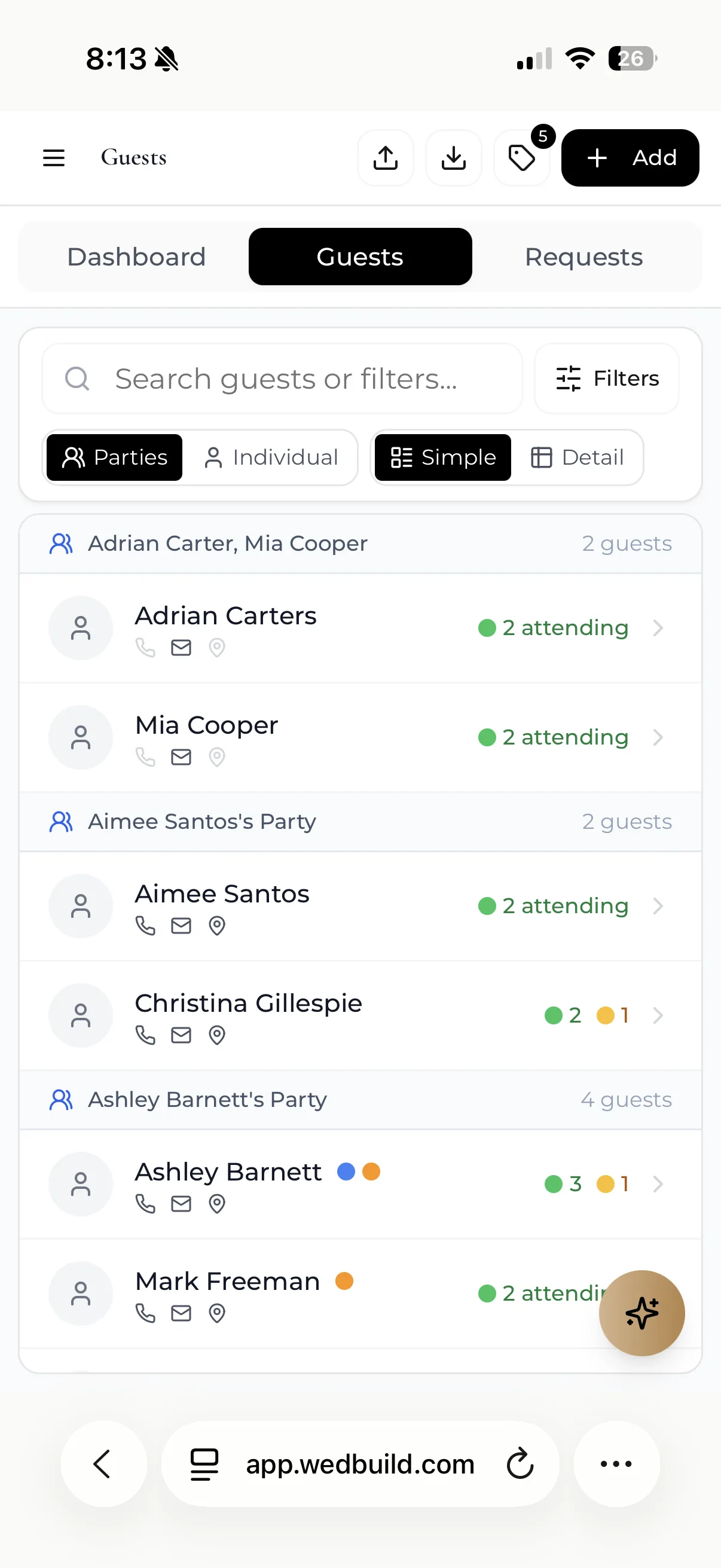
Put these names into one place, ideally not just a random note on your phone. WedBuild gives you that central guest list: one structured list that you can edit, tag and build on as things evolve.
Don’t worry about getting it perfect at this point. You’re just building your foundation.
Step 2: Create an A List and a B List
Once your core guests are down, start layering in others:
- A List: people you definitely want to invite
- B List: people you’d like to invite if space and budget allow
This might include:
- Extended family
- Work friends
- Family friends
- Plus ones and partners
The A/B list system takes some of the pressure off. Instead of feeling like everyone is an all-or-nothing decision, you give yourself room to adjust based on venue capacity and budget.
Tiering guests into priority groups keeps the emotional decisions and the logistics separate, and it's the approach the rest of this guide assumes.
Digital tools like WedBuild are being built to make this easier by letting you group and segment guests cleanly, instead of trying to colour-code a messy spreadsheet.
Step 3: Align Your Guest List with Your Budget
This is the part people often skip, and then regret later.
Once you have an approximate total for your A list (and maybe B list), pair that with your wedding budget:
- Look at your estimated per-person cost (venue, catering, drinks, etc.)
- Check whether your current numbers feel comfortable, tight, or totally unrealistic
- Decide if you need to trim the list, adjust your budget, or rethink the style of the day
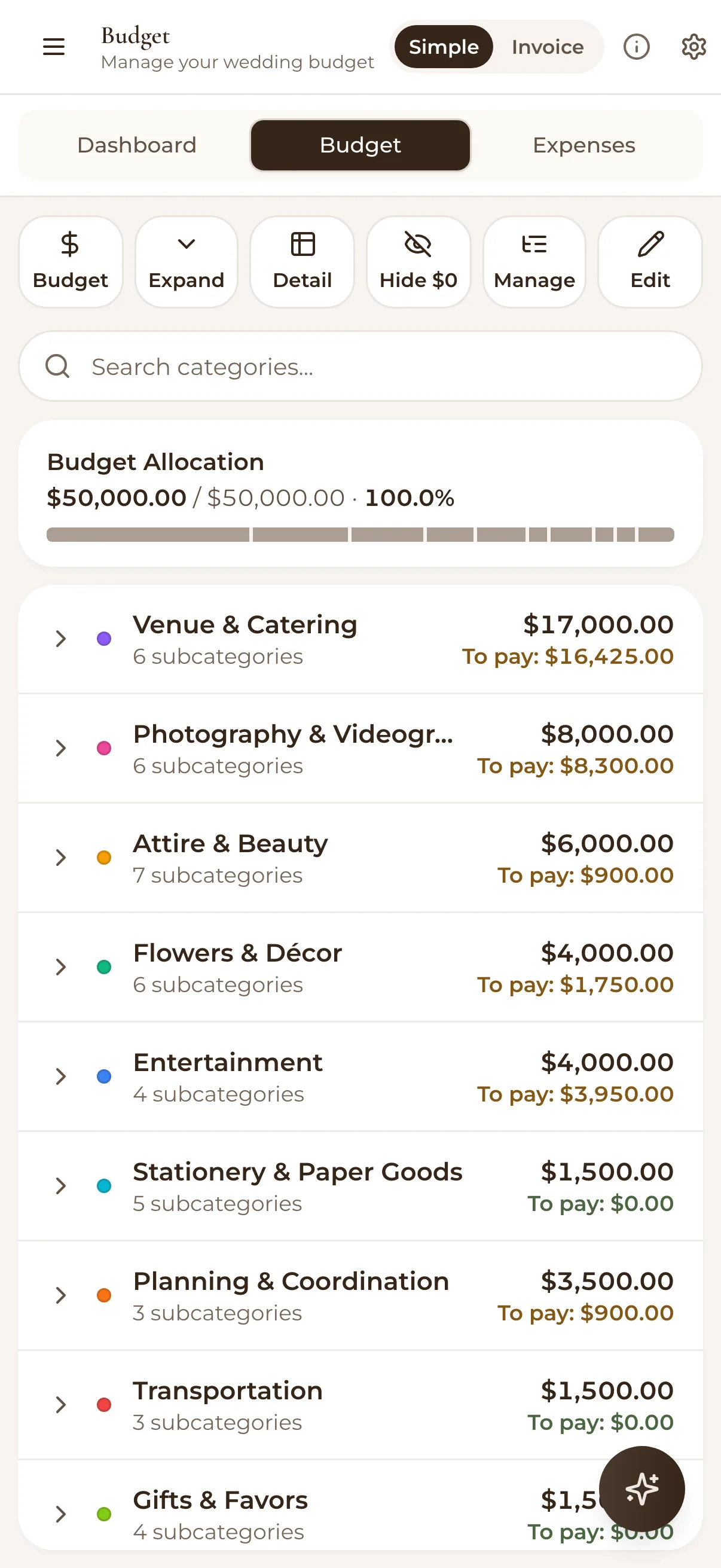
WedBuild is being designed around the idea that your guest list and budget should talk to each other, not live in separate worlds. When those numbers are visible in one place, decisions about who to invite become clearer, even if they’re still emotionally tricky.
Step 4: Set Some Ground Rules (Together)
A lot of guest list stress comes from decisions that haven’t been clearly agreed on. Sit down as a couple and talk through things like:
- Are you inviting children?
- Are plus ones automatic, or only for long-term partners?
- Are there any “non-negotiable” family invites on either side?
- Are you having a smaller ceremony and larger reception, or the same group for both?
Decide these rules early and apply them consistently. It makes the difficult conversations much easier later on.
Once you’ve agreed on your guest list rules, you can apply them consistently. WedBuild is being developed to let you keep notes and tags against guests, so you can easily see who’s invited to which events and how everything hangs together.
Step 5: Organise Guests into Events
Not every guest will be invited to every part of the wedding. As your plans take shape, start assigning people to specific events, such as:
- Ceremony
- Reception
- Recovery brunch or next-day gathering
- Pre-wedding welcome drinks (if you’re having them)
Having this kind of event-based structure from the start makes it much easier later when you’re sending invitations, tracking RSVPs and planning catering. That’s exactly the kind of structure WedBuild is being built around: one guest list, multiple events, no duplicate data. When it comes time to choose where the RSVPs actually land, the best wedding RSVP websites in Australia compares the options.
Step 6: Expect Edits (Because They Will Happen)
Here’s the truth: almost no couple creates their guest list once and never touches it again.
People move, relationships change, budgets shift, venues have limits and families… have opinions. The important thing is not to avoid changes, but to make them easy to manage.
A digital planning home like WedBuild is being created to handle:
- Guests being added or removed
- People changing from “maybe” to “definitely”
- Last-minute life changes that affect who can attend
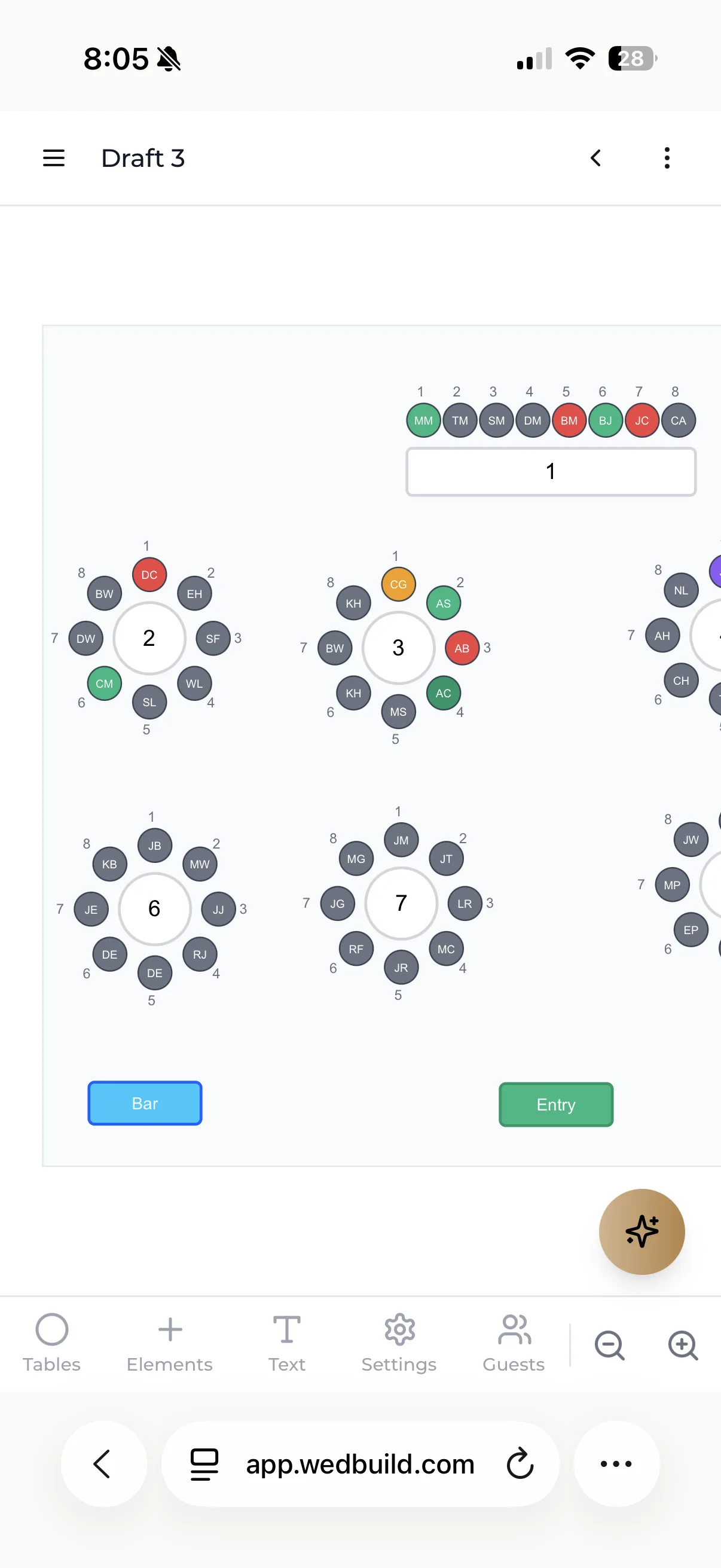
Instead of rewriting lists from scratch, you update one shared system and everything (invitations, RSVPs, eventual seating plans) flows from there.
Step 7: Don’t Let the Guest List Run the Whole Show
It’s easy to let the guest list dominate every decision, but it isn’t the only factor in your wedding.
Come back to three questions when you feel stuck:
- Does inviting this person feel right for us?
- Does this fit within the type of day we’re trying to create?
- Are we comfortable with the impact on our budget and space?
Your guest list should support the kind of wedding you want, not quietly take it over.
Bringing It All Together with WedBuild
At its heart, your wedding guest list isn’t just a list of names, it’s the backbone of your planning. It affects your budget, venue, run sheet, seating chart and guest experience.
WedBuild is being designed to keep that backbone strong and simple: one place where you can build your guest list, refine it over time, and eventually connect it with RSVPs, planning and the rest of your wedding day details.
Keep reading
Once you've drafted your initial list, the next steps are connecting it to RSVPs and the rest of your planning. see how online wedding RSVPs work, get the wedding day planning checklist, and explore WedBuild's guest list management.
Before you go
Frequently asked questions
How many people should I invite to my wedding?
The Australian average is 100 guests, with a median around 80. The right number is whatever fits your venue capacity, your budget (each extra guest costs $185-$305 in 2026), and the wedding feeling you want: small weddings allow longer per-guest time, larger ones feel more celebratory.
Do I have to give everyone a plus-one?
No. Plus-ones are normal for guests in long-term relationships. Plus-ones for single guests who don't know anyone else at the wedding are optional and often add cost without adding value to the day.
How do we split the guest list with parents?
Give parents a specific number rather than asking 'who do you want to invite'. Open-ended produces 40 names. Common compromise: parents who contribute financially get more invites; parents who don't get a smaller fixed allocation.
Should we invite work colleagues?
Only those you actually socialise with outside of work. Inviting colleagues you've never had a non-work conversation with creates politics and adds cost. Most colleagues don't expect to be invited.
What's an A-list and B-list?
An A-list is your initial invite group; a B-list is a backup list of guests you'd invite if A-list invitees decline. B-lists work but recipients can sometimes tell from the timing, so most modern AU couples skip the B-list and stick with one round of invitations.
How early do I need a final guest list?
Final list locked 4-6 months before the wedding (when invitations go out). Initial draft 12+ months out, refined as the budget and venue firm up.

Written by
Elise Schofield
Co-founder, WedBuild
Elise is the co-founder of WedBuild and a newlywed who knows exactly what it’s like to be buried in wedding spreadsheets. Frustrated with outdated websites and messy planning tools, she helped build WedBuild so couples can plan their weddings with less chaos and more “this actually feels fun".