Wedding Planning
How to Compare Wedding Vendors Without Losing Your Mind
Compare every wedding vendor on the same five dimensions (real cost, inclusions, flexibility, communication and proof), normalise the quotes, and decide before the good ones book out.
By Henry Schofield
· 8 min read
Somewhere around the fourth photographer quote, wedding vendor comparison stops feeling like shopping and starts feeling like a second job. One quote is a PDF, one is a dot-point email, one is "from $2,900" with an asterisk doing a lot of heavy lifting. They don't cover the same things, they don't cost the same way, and the details are scattered across nine email threads and two phone calls your partner half-remembers.
Here's the fix: compare every vendor (photographer, caterer, venue, florist, celebrant) on the same five dimensions, normalise the quotes so they're actually comparable, and keep the whole comparison in one place next to your budget. That's the entire method. The rest of this article is how to do it without losing your mind.
The Five Dimensions That Actually Matter
1. Total real cost, not the headline number
The quote that looks cheapest almost never is. Add travel fees, overtime rates, delivery and pack-down, GST if it's quoted exclusive, meals for vendors working through dinner, and anything listed as "on request". The real comparison is the number at the bottom after all of that, and it can reorder your shortlist completely. Our guide to the wedding costs couples always forget covers the usual suspects.
2. What's actually included
Two caterers at $95 a head are not the same caterer when one includes staff, tableware and the cake cutting, and the other bills each separately. Write down inclusions in your own words, not theirs. If you can't explain what you're getting to your partner in one sentence, you don't know yet. Ask.
3. Availability and flexibility
Are they actually free on your date, or "pencilled in pending deposit"? What happens if your numbers change? Is there a cut-off date for final headcount, and how hard is it to move? Wet-weather options, early pack-downs, venue restrictions on suppliers: the flexible vendor at a slightly higher price usually costs less than the rigid one by the end.
4. How they communicate right now
The sales process is the best behaviour you will ever see from a vendor. Slow replies, vague answers and "we'll sort that closer to the date" during the quoting stage do not improve after you've paid a deposit. A vendor who answers clearly and promptly while trying to win your business is showing you what the working relationship looks like. Weight it accordingly. It predicts your stress levels better than the price does.
5. Proof
Full real galleries (not highlight reels), recent reviews that mention your kind of wedding, and, for the big-ticket vendors, a reference you can actually contact. A photographer's best forty shots across ten weddings tells you much less than one full wedding delivered end to end.
Normalising Quotes So They're Comparable
Before you compare anything, restate every quote in the same shape: total cost with everything included, hours of service, what's in and what's extra, deposit and payment schedule, and the cancellation terms. Ten minutes per quote. This is the step almost everyone skips, and it's why couples end up choosing on vibes and regretting it on invoices.
While you're in there, watch for the contract red flags: deliverables described vaguely ("coverage of the day"), deposits that are forfeited in every scenario, no stated backup plan if the vendor is ill, and rain plans that exist only verbally. None of these is necessarily a dealbreaker, but every one of them is a question to ask in writing before you sign.
How Many Quotes Is Enough?
Three genuine quotes per vendor category, properly normalised, beats eight quotes skimmed. Enough to see the market rate and the range of inclusions; few enough that you actually read them. If all three land wildly apart, get a fourth. A spread that big usually means the briefs they quoted against weren't the same, which is worth fixing before you decide anything.
Keep the Comparison in One Place
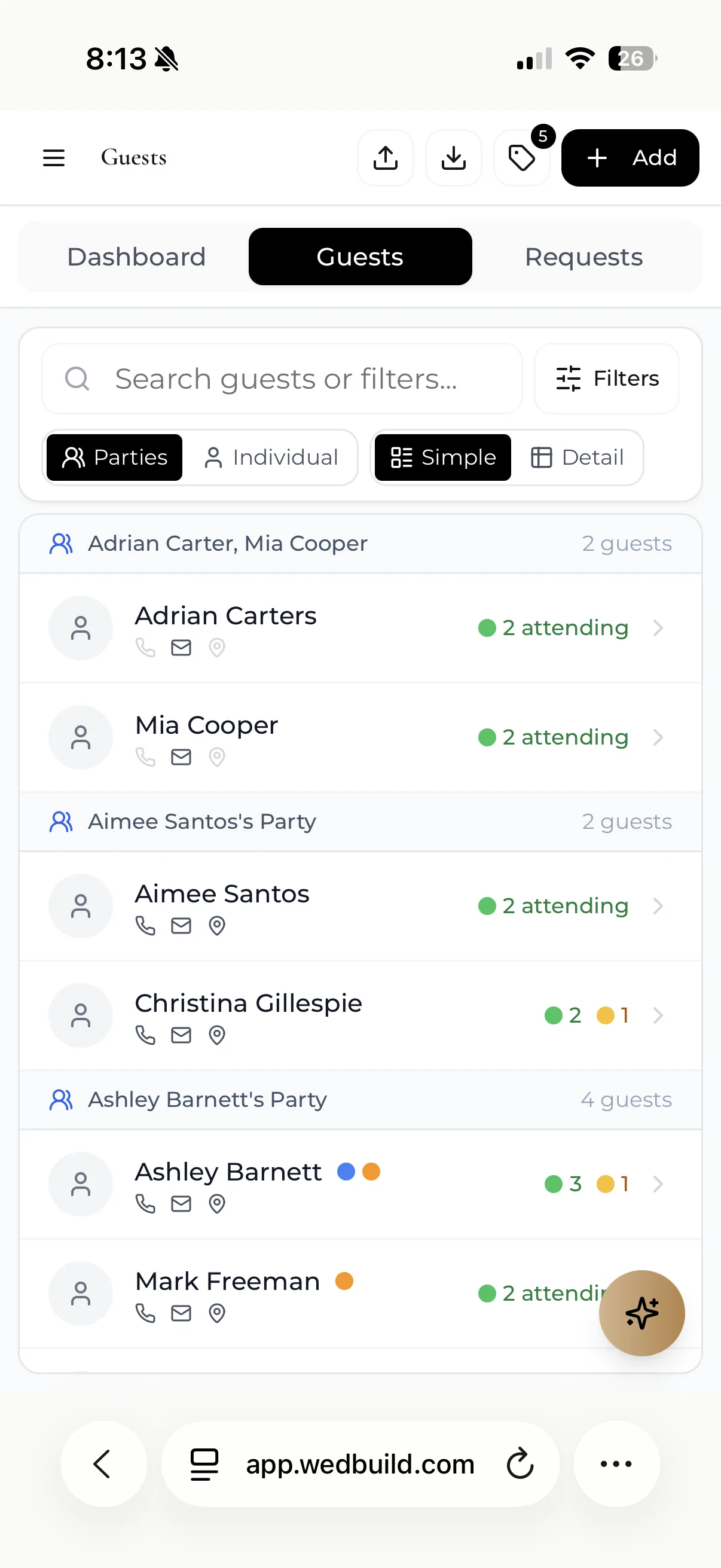
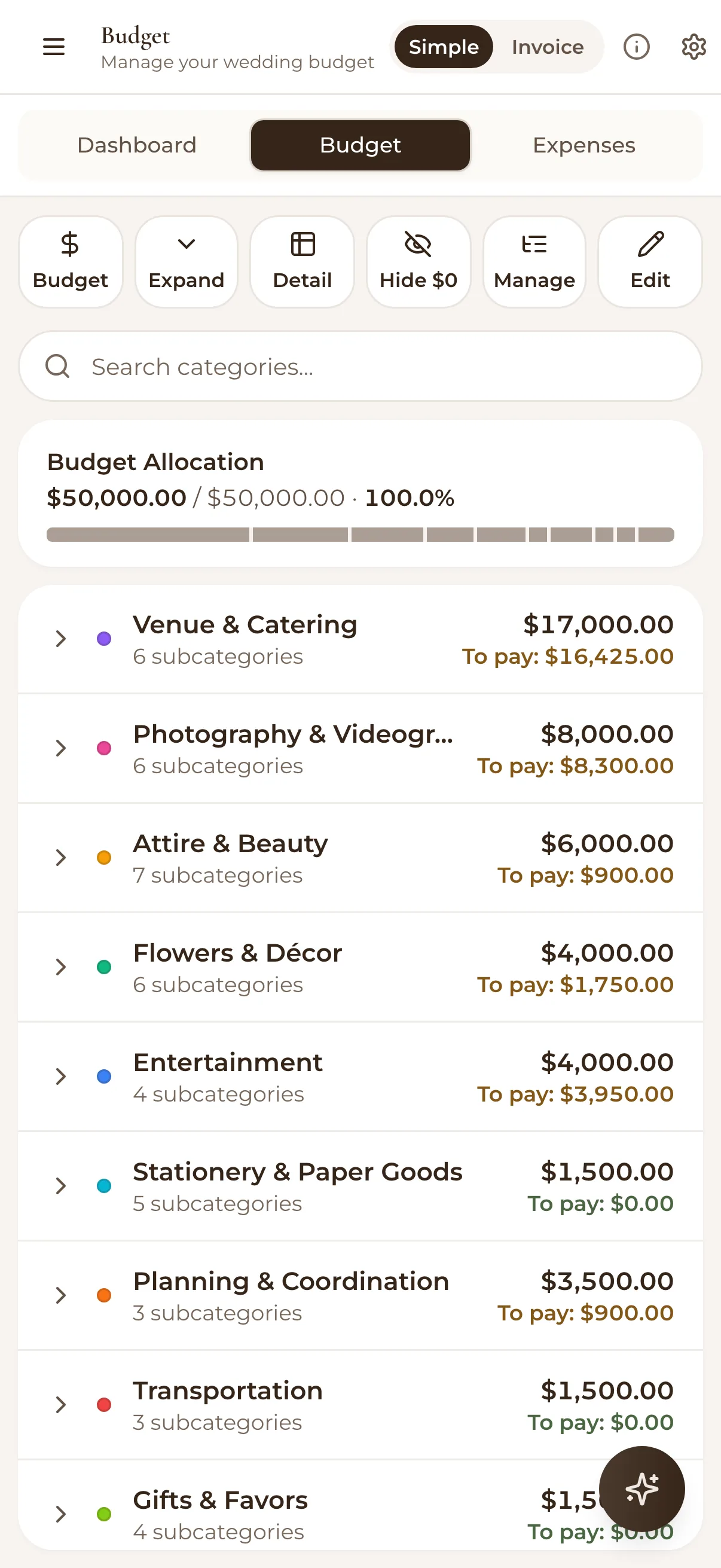
The comparison only means something in context: what the venue eats out of the budget decides what's left for the photographer, and your guest count moves the catering quote before you've finished reading it. That's why vendor comparison belongs next to your budget and guest list, not in a folder of PDFs. WedBuild's vendor comparison is built exactly this way: quotes, inclusions and contacts side by side, connected to the budget and headcount they affect. It's part of Pro, a one-time A$199 (never a subscription), and every new couple gets seven days of the Pro tools free to try it. And if you're benchmarking against real numbers, our breakdown of average wedding costs in Sydney is an honest place to start.
When to Just Decide
Analysis has a price too. The good vendors book out first. Every fortnight you spend building the perfect comparison is a fortnight your first choice might take another wedding on your date. Once a vendor clears all five dimensions and the contract reads clean, book them. A decision at ninety percent certainty this month beats a decision at ninety-five percent certainty after your favourite photographer is gone.
Which Vendor to Lock In First, and Why
Book first: the venue. It sets the date, the guest cap and roughly half the budget, and every other quote you collect depends on all three. Comparing caterers before the venue is settled is comparing hypotheticals.
Book second: photographer and celebrant. The one-per-day vendors. In Australian peak season, October to March and any Saturday, the good ones are gone 10 to 12 months out. These are the two where waiting costs you the shortlist rather than the price.
Book last: florist, music, styling and hire. They need the venue's rules and your final-ish numbers to quote accurately, and there are more of them to choose from. Getting quotes early just means re-quoting later.
Worth paying more for: anything you cannot redo. The photographer and the celebrant are a single unrepeatable performance; the flowers are not. Spend the difference where a bad outcome is permanent.
How WedBuild Handles Vendor Comparison
The five dimensions above only work if you actually write them down for every quote. In practice most couples keep vendor quotes in an inbox, a notes app and two browser tabs, then try to compare them from memory three weeks later, which is how the cheapest-looking quote wins on a technicality.
WedBuild's vendor comparison gives every quote the same shape: cost, what is included, what is not, and a score against the dimensions you decide matter. Because it is connected to the budget planner, the vendor you book goes straight into your budget as an invoice, ready for its deposit and balance, rather than being retyped. When a quote is per head, it is priced from your guest list, with a quick refresh whenever your numbers move.
The numbers, in AUD: WedBuild's vendor comparison with scoring is part of Pro, A$199 paid once. The budget planner comes with Standard at A$99, also paid once, which removes the 50-guest limit. The free plan covers weddings up to 50 guests with the guest list, wedding website, online RSVPs and checklist. No subscriptions at any tier, and WedBuild is built in Australia, so the categories match how Australian venues and vendors actually quote.
Before you go
Frequently asked questions
How many wedding vendor quotes should I get?
Three real ones per category, normalised to the same shape. Add a fourth only if the first three land wildly apart. That usually means one of them has read the brief differently, and a fourth quote tells you which.
When should I book each wedding vendor in Australia?
Venue first, since it sets the date and the budget. Then photographer and celebrant (the one-per-day vendors) around 10 to 12 months out, and earlier again for a Saturday between October and March. Caterer, florist and music follow once the venue's rules are known.
Is the cheapest quote ever the right call?
Sometimes, but only after normalising. A cheap quote with thin inclusions and a vague contract is the most expensive thing in this article.
What is the best way to compare wedding vendor quotes?
Put every quote into the same five columns (real total cost, what is included, what is explicitly excluded, flexibility on changes, and evidence they have done it before) and keep them somewhere you will still be able to read in three months. WedBuild's vendor comparison does this with a scoring column and links the chosen vendor to your budget; it is part of Pro at A$199, paid once. A shared document works too, as long as everything lands in the same shape.
What should I ask every vendor before signing?
One question does most of the work: what is not included in this quote? Then ask about travel, overtime rates, vendor meals, and what happens if your numbers move. Those four are where the hidden costs live, and they are the difference between quotes that look comparable and quotes that are.

Written by
Henry Schofield
Co-founder, WedBuild
Henry is the co-founder of WedBuild and a chartered accountant who's spent his career helping Australian businesses get their numbers right. After his own wedding budget sprawled across three different spreadsheets, he built WedBuild's budget planner: designed by an accountant, for couples who'd rather not become one.