Budget
Average Wedding Cost on the Gold Coast 2026: A Real Breakdown
A mid-sized Gold Coast wedding in 2026 depends mostly on guest count and venue type. See the line-by-line breakdown and the extra costs couples often miss.
By Henry Schofield
· 11 min read
Photo by Joseph on Unsplash
A Gold Coast wedding budget for 2026 needs more than a national average. The shape of the celebration, especially the guest count and venue type, provides a useful starting point. Those choices set the biggest bills, while vendor tiers and package inclusions explain why apparently similar weddings can finish with very different totals.
What a Gold Coast wedding actually costs in 2026
Easy Weddings’ Gold Coast venue guide, drawing on its annual wedding industry report, puts the average Gold Coast wedding at A$25,000 to A$35,000, with A$10,000 to A$20,000 of that going to the venue. Across Queensland, the Easy Weddings 2026 Australian Wedding Industry Report puts the average wedding at A$32,645, against a national average of A$38,252. Any single figure within that range is a flexible reference point. A beachfront resort wedding with a large guest list costs substantially more than a modest celebration.
Guest count and venue type do the most work. Headcount multiplies food, drinks and other per-person charges, while the venue sets the terms for catering, styling and logistics. Vendor tier then moves individual categories up or down. An elopement can sit well below the range, while a large resort celebration can exceed it. Smaller contract charges also explain why the final spend can overtake the original plan.
How the Gold Coast sits relative to other Australian cities
Queensland is one of the lower-cost states for weddings. In the Easy Weddings 2026 report, its average of A$32,645 sits below New South Wales at A$42,322, Victoria at A$39,502, Western Australia at A$35,961 and South Australia at A$34,888, with only Tasmania lower at A$25,423. But this is also a destination market. Couples from other states and countries who book for the beaches and hinterland keep experienced vendors busy, pushing prices above those for weddings in regional Queensland and similar weddings in Brisbane suburbs. For couples weighing the Gold Coast against Brisbane or the Sunshine Coast, the destination premium is the main distinction between broadly similar vendor markets.
The full line-by-line budget breakdown
Venue and catering take the largest combined share, so the other categories cannot be settled properly until those two are clear. Venue covers the space or package, while catering covers food and, where included, drinks. Styling, decor and hire are easy to underestimate at first, and their place in the budget depends partly on what the venue already supplies.
Photography needs its own place in the budget, with room for any extra coverage or finished products. Celebrant, cake, invitations and stationery, transport, and hair and makeup are separate commitments too. Dress alterations and extras in the contract need room in the budget beyond the quoted prices. Catering quotes need a close check, because the menu style and whether drinks are included can change the cost a great deal.
The Easy Weddings 2026 Australian Wedding Industry Report gives these Queensland averages by category:
| Category | Queensland average (2026) |
|---|---|
| Venue | A$15,849 |
| Catering | A$4,645 |
| Photography | A$3,190 |
| Dress | A$2,193 |
| Flowers | A$1,977 |
| Hair and makeup | A$991 |
| Celebrant | A$976 |
| Formal wear | A$930 |
| Invitations | A$844 |
| Transport | A$747 |
| Cake | A$638 |
Venue: the decision that sets the floor for everything else
The venue controls more than the hire fee. It sets guest capacity, catering terms and, in many cases, how much styling the space needs. An all-inclusive resort rate may cover food, styling and coordination that a dry-hire budget lists as separate costs. The comparison only works when the inclusions match.
The Gold Coast has two distinct venue markets. Beachfront options span Surfers Paradise, Burleigh Heads and Coolangatta, while hinterland retreats include Tamborine Mountain, Springbrook, Currumbin Valley and Lamington. Each has different catering terms and transport requirements. Neither setting has one reliable price tag. The package and logistics determine how the location feeds into the total.
Sheraton Grand Mirage at Main Beach is a beachfront resort reference point, while InterContinental Sanctuary Cove Resort at Hope Island sits in the resort tier. Currumbin Wildlife Sanctuary offers a wildlife park setting in Currumbin. All three require a quote rather than offering a published price in the supplied venue information. Couples comparing them need the same guest count and a clear account of what each package includes.
Catering: the line item that scales directly with the guest list
Once the venue is set, catering is the most controllable large expense because it follows headcount and menu format. Cocktail and canapé service sits at the lower end, buffet in the middle, and a seated three-course meal with a full drinks package at the upper end. Format drives the price more than ingredient choices. Food-only and food-and-beverage quotes are not interchangeable.
Drinks often cost more than the first estimate allows for. Couples getting quotes should check whether the price per head includes them before they compare the totals. Booking the caterer early, or choosing included catering, can lock in that rate. Without a signed contract, caterers can reprice against current wage and ingredient costs. Dietary requirements create a separate coordination task, because the kitchen and seating plan need the same information about who is eating what.
Photography: what the Gold Coast market charges and what moves the price
Gold Coast wedding photography sits above Brisbane prices, supported by destination demand and the mix of beach and hinterland work. Coverage length is a useful starting distinction. Mid-range packages cost A$3,500–A$5,500 for 8 hours and 400–550 edited images, sometimes including an engagement shoot. Premium packages cost A$5,500–A$7,500 for 10 hours and 550–700 edited images, with an engagement shoot included. Luxury packages reach A$7,500–A$10,000+ for 12+ hours and 700+ images, also including an engagement shoot.
A second shooter costs A$400–A$700 on the Gold Coast, drone footage adds A$300–A$600, and a designed album adds A$700–A$1,500. A separately charged engagement session costs A$400–A$800. Some scenic hinterland locations, including Lamington National Park, also require permits. Couples should check what permits they need and whether there is a fee to use the location.
The calendar affects both availability and price. Popular photographers are usually booked 9–13 months ahead for Saturdays in winter and spring. For a peak winter Saturday, enquiring 12–14 months out is advisable. Weekday and January–March wet-season bookings can offer lower rates. The beach-versus-hinterland decision is therefore only part of the photography budget, and a reliable price ranking depends on other factors as well.
Celebrant and other fixed-ish costs
Celebrant, cake, stationery, transport, and hair and makeup often receive whatever is left after the larger bookings. That is a weak basis for estimating them. Together they take a meaningful share of the budget, and agreed prices are rarely negotiable once booked.
Cake costs rise with custom designs and tiered cakes for larger guest counts. Digital invitations can reduce or remove the stationery bill, while keeping RSVPs with the guest list removes manual reconciliation. The budget for transport may start small, but hinterland venues can mean more work to get guests there. Hair and makeup costs depend mostly on how many people are in the bridal party. The celebrant remains a separate commitment even when the celebration itself is pared back.
Costs couples regularly miss until the invoice arrives
Budget overruns often come from a cluster of smaller charges rather than a badly judged venue or catering allowance. Dress alterations can cost hundreds of dollars and are rarely included in the purchase price. Cake cutting, corkage, chair cover hire, ceremony amplification and vendor meals may also be left out of the venue’s main quote. Each is a reason to request an itemised contract before signing.
That contract review should also cover overtime and any location permits needed for the planned photography. Gratuities should be part of the discussion too, though couples can choose whether to pay them. Tipping is not universal in Australia, although it is increasingly common for photographers, coordinators and catering staff. A contingency gives these less visible costs somewhere to go. It works best when known extras are already recorded separately, leaving the spare money available for unforeseen costs.
Three realistic cost scenarios: elopement, small wedding, full celebration
An elopement starts with a different spending structure from a reception for a guest list. Gold Coast Marriage Office puts a proper elopement for two people, or a handful, at a few thousand dollars all-in. A paperwork-only marriage is a narrower option, with an offering from A$820. The legal marriage and the celebration are separate decisions. Paying for one does not require building the other around it.
A small wedding adds the cost of having guests but can still be smaller than a full celebration. Food, drinks, venue terms and the chosen photography package determine where it lands. The figures here give no single total for a small wedding. A short guest list does not make every vendor cheaper, especially where the booked service or coverage stays the same.
A full mid-sized celebration is the shape behind that moderate starting budget range. A large resort event can sit above it, particularly with more guests and higher-tier vendors. The practical first step is to identify which shape fits the actual plan before collecting quotes. Otherwise, the couple can end up planning a full reception on an elopement budget.
How timing and day of the week move the total
For couples looking to reduce costs, the calendar is a practical first lever. A different booking day can lower the price without requiring a lower-tier vendor. Autumn, March–May, and spring, September–November, are peak seasons, supported by mild weather and interstate demand. Vendors charge the most for Saturdays in those seasons. Booking a lower-demand date can bring savings while preserving the quality of the day.
Bookings in the January–March wet season cost less and offer quieter places for photography, though there is some risk of storms. Weekdays in the May–August off-peak season can have both mild weather and lower prices from vendors. These seasonal labels overlap at the edges. Winter Saturdays can still be in strong demand for photographers, so “off-peak” is not a promise that every supplier will discount. Couples who can change their date should compare what their chosen vendors would charge on each day.
Guest count is the master variable, and couples control it
The guest list is a financial decision before it becomes a seating plan. Catering, drinks, stationery and favours multiply against headcount, while venue capacity limits which spaces fit. Reducing the list can therefore cut several charges at once. Few other decisions reach across so many categories. That makes guest count a constraint to establish before booking the major suppliers.
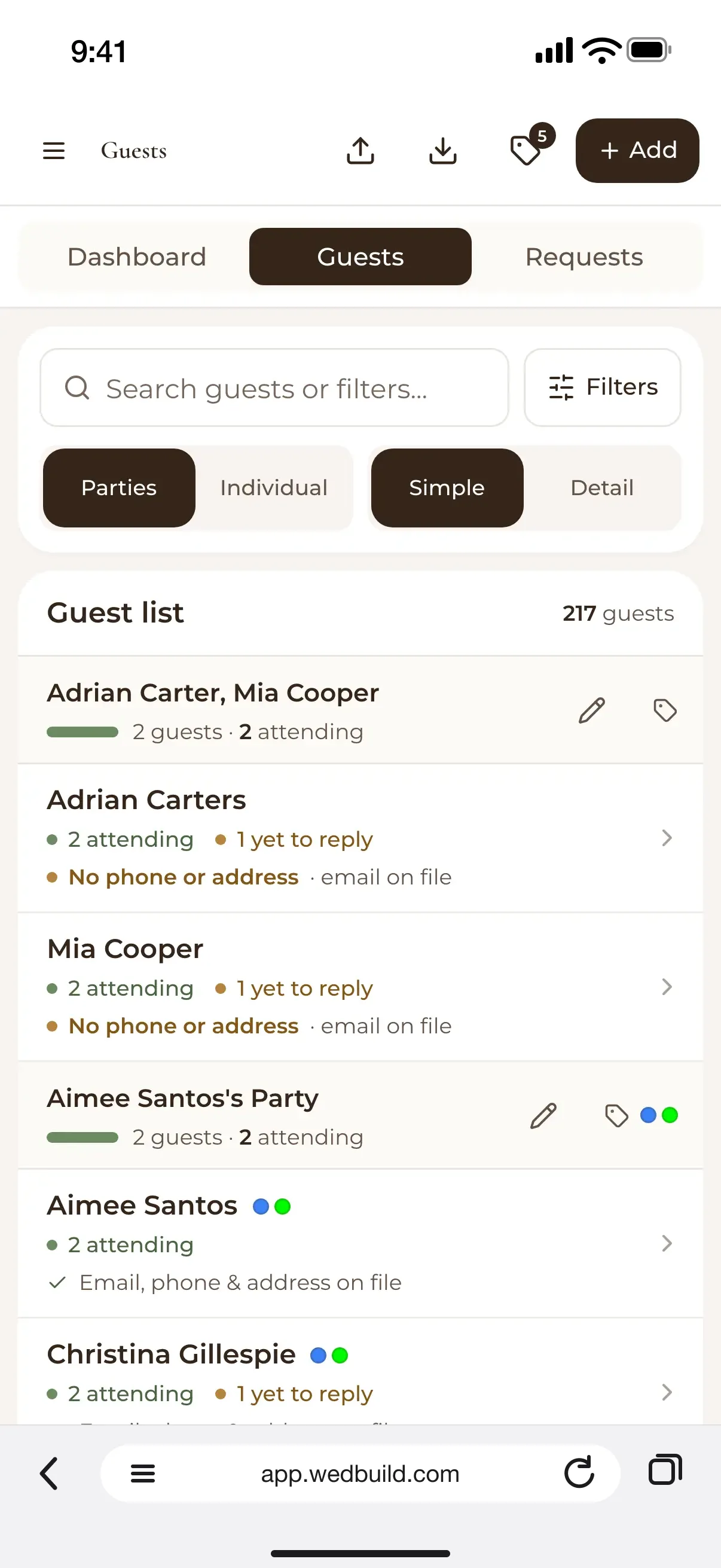
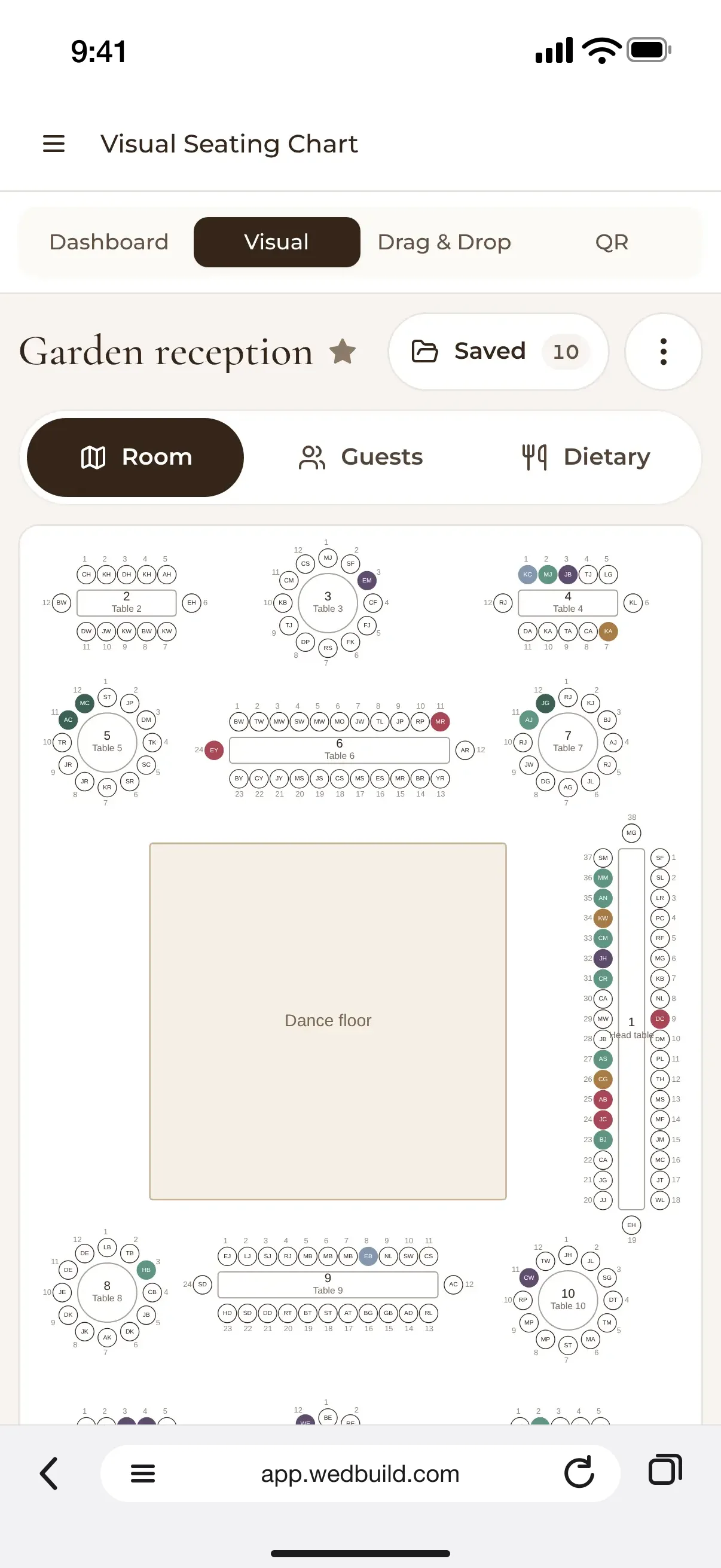
A handful of dietary requirements may be manageable in a notebook, but a large list produces replies across email, text and conversation. Those responses still have to reach the seating plan and kitchen correctly. A smaller list changes the bill, while a coordinated list reduces the work of managing it.
Building a budget that reflects your actual priorities
To turn these ranges into a working budget, fix the guest count first and choose the venue type second. Then protect the two or three categories that mean most to the couple, assigning the remainder to everything else. This keeps priorities ahead of incidental upgrades. A beach resort, hinterland retreat or dry-hire space will each have different catering terms, styling needs and a minimum amount to spend.
Get at least three quotes for each major type of vendor, all for the same date, guest count and hours so they can be compared. Compare inclusions line by line, because a lower base price may omit something a higher quote covers. Build in contingency for overtime, alterations, permits and gratuities. Separating the legal marriage from a later celebration is also a legitimate option for couples who want to concentrate spending differently.
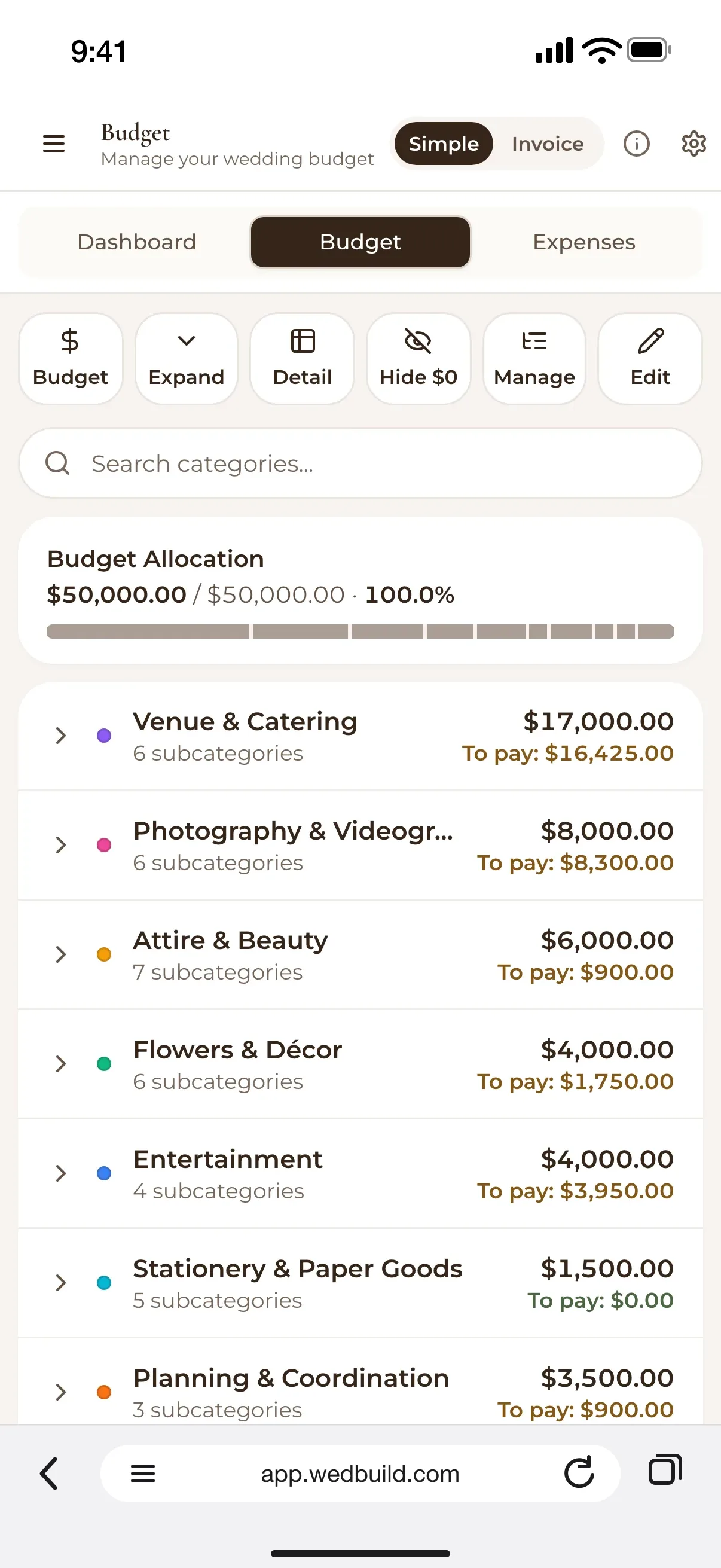
WedBuild is one option for turning the breakdown into a working budget: its budget planner keeps categories, invoices and payments together, with planned against actual at a glance. WedBuild is free to start, and the budget planner is on the Standard and Pro plans.
With the guest count, priorities and likely spend established, the next planning step is locking in the venue and date.
Before you go
Frequently asked questions
How much does a wedding on the Gold Coast cost in 2026?
Easy Weddings’ Gold Coast venue guide puts the average Gold Coast wedding at A$25,000 to A$35,000, with A$10,000 to A$20,000 of that going to the venue. Guest count and venue type do the most to move the total.
Is a Gold Coast wedding cheaper than the national average?
Queensland weddings average A$32,645 in the Easy Weddings 2026 Australian Wedding Industry Report, against a national average of A$38,252. Only Tasmania averages lower, at A$25,423.
How much does a Gold Coast wedding photographer cost?
Mid-range packages cost A$3,500 to A$5,500 for 8 hours, and premium packages cost A$5,500 to A$7,500 for 10 hours. Luxury packages reach A$7,500 to A$10,000+ for 12+ hours.
When is the cheapest time to get married on the Gold Coast?
Weekday and January to March wet-season bookings can offer lower rates, though the wet season carries some risk of storms. Weekdays in the May to August off-peak season can also bring lower prices from vendors.

Written by
Henry Schofield
Co-founder, WedBuild
Henry is the co-founder of WedBuild and a chartered accountant who's spent his career helping Australian businesses get their numbers right. After his own wedding budget sprawled across three different spreadsheets, he built WedBuild's budget planner: designed by an accountant, for couples who'd rather not become one.