Budget
What Is the Cheapest Month to Get Married in Australia? Month-by-Month Demand, Day-of-Week Savings and How to Negotiate an Off-Peak Date
Winter is cheapest down south, but a Friday can save as much.
By Henry Schofield
· 11 min read
Photo by Dan Morris on Unsplash
June and July are generally the cheapest months to get married in southern Australia, but winter is peak season in the tropical north. The real saving comes from matching a quiet month with a less popular day, then negotiating against the vendor’s actual demand. A Friday instead of a Saturday can change the price as much as the month does.
Why Australian wedding prices move with demand, not just season
Wedding vendors price primarily around occupancy. When several couples want the same slot, there is little reason to reduce the price. Saturday evenings are the most expensive booking in almost every venue category because competition is strongest then, while quieter days give vendors a reason to offer lower minimums or extra inclusions.
The national statistics agency’s Marriages and Divorces, Australia, 2024 recorded 120,844 marriages, up from 2023. The post-pandemic booking surge also tightened peak-season availability and strengthened vendors’ pricing power on popular Saturdays. Month and weekday are separate pricing levers, and using both gives couples more scope than changing the season alone.
What the ABS data shows about when Australians actually marry
The ABS’s 2024 data shows that November had the most weddings at 11.5%, with October and March close behind. July is the quietest month, and June is nearly as quiet. The distribution is sharply uneven across the year. March, May, October and November together account for a much larger share of wedding dates nationally than June through August.
As a practical calendar, January is a low-demand summer month, February a shoulder month, and March a peak month. April is part of the busy autumn window, while May can be a late-autumn shoulder at some venues even though it is popular across the country. June and July form the winter trough. August is one of the quieter winter months, September is the early-spring shoulder, and October and November are peak months. Early December offers another shoulder window before Christmas disrupts the calendar.
These are demand bands. Victorian Births, Deaths and Marriages’ monthly registration data, updated October 2026, shows more registrations in April and May than in July and August in the years shown. The registry counts marriages when registered, however, which may not be the month the ceremony occurred.
Why June and July are cheapest in the south but peak in Queensland
June and July give couples in Victoria, Tasmania, South Australia and southern New South Wales the clearest low-demand window. Fewer couples compete for dates in cold winters, so there is more room to ask venues, photographers and caterers for a lower price. Geography changes the answer completely, though. July is off-peak in Melbourne. It is peak in Cairns.
In far north Queensland, the Top End and the Kimberley, winter is the dry season, with warm days, low humidity and clear skies. Premium venues in Cairns, the Whitsundays, Broome and Darwin can book out well ahead for June and July, with top-tier pricing and limited vendor availability. Queensland couples who want a cheaper date should instead look at wet-season shoulders, including November and March to April. For destination weddings especially, the venue’s local calendar must replace the couple’s home-state assumptions.
The surprise of January and the shoulder months couples overlook
The ABS puts January at just 6.2% of all 2024 weddings nationally, making it a low-demand option despite summer conditions in southern cities. Demand drops after Christmas as guests disperse and many vendors have quieter diaries. Couples who want warmth without spring competition should get a quote for January before ruling it out.
Demand in early December, before Christmas week, and February is above the winter trough but below the October to November peak. They can offer lower minimums or more negotiating room without requiring a winter wedding. May can also provide an opening as demand falls away from the March and April window at some venues. Its strong national showing means that “late autumn” is not enough to establish that a particular date is cheap.
September has another gap before bookings pick up in October. Earlier dates, especially midweek, may still have shoulder or off-peak pricing at venues where October weekends have filled first. These are smaller openings than deep winter generally offers. The practical approach is to think in demand tiers rather than dividing the year into “peak” and “winter”, and to get each vendor’s shoulder-season terms in writing.
How the day of the week produces savings that rival the month choice
Moving from Saturday to Friday or Sunday often saves as much as moving from October to July. Saturdays hold a far larger share of Australian weddings than Fridays or Sundays. That concentration creates the Saturday premium. Friday and Sunday bookings generally have lower venue minimums or hire fees than the equivalent Saturday, making weekday choice more than a minor adjustment.
A July Friday in a southern city combines a quiet month with a quieter day. Monday-to-Thursday weddings can open further discounts, but the attendance trade-off is stronger. They suit couples with smaller guest lists and those who care more about the budget than having everyone there. For those couples, pricing only weekends misses part of the market.
Factory 51 in Brisbane publicly lists a midweek pricing structure that differs from its weekend rates. Mulberry Estate in Swan Valley charges less for winter Monday to Thursday weddings than for those on weekends. Both illustrate the kind of offer available. Their current rates, inclusions and conditions need written confirmation directly from the venues before a couple relies on them.
An October Saturday and a July Friday test both levers together, while a July Saturday tests only one. This distinction belongs in the first quote request. Otherwise, couples may book a winter date without finding out how much more they could save by changing the day.
What off-peak pricing actually looks like, with an illustrative AUD worked example
Typical pricing flexibility is modest, depending on demand, date and whether the couple also changes the event’s scope. A shorter reception or smaller guest count can influence the result, so a lower total is not always a pure date discount. Large reductions are not a sensible starting assumption. Even a small price cut on venue and catering reduces the largest single part of a wedding’s cost.
Consider an illustrative comparison at a southern Australian reception venue. These are hypothetical AUD amounts. Suppose an October Saturday costs the same amount in AUD for venue hire as for catering. A July Friday with a modest reduction on venue hire saves part of that cost. If the caterer also reduces its line by the same proportion, that doubles the saving.
Suppose the photographer’s smaller hypothetical quote in AUD falls by a lower proportion for the same date. That adds a smaller amount to the combined saving before any extra costs. Catering must not be discounted twice if it is already included in a combined venue package.
A budget calculator helps test whether that difference survives changes elsewhere in the plan. City-cost breakdowns for Sydney, Melbourne, Brisbane, Perth and another city provide local context, while guides to overlooked wedding expenses and budget adequacy help frame the wider budget. The quotes still need to cover the same number of guests and the same inclusions. Without those, the cheaper quote may just be for a smaller wedding.
The real trade-offs of choosing an off-peak date
A winter wedding in Melbourne, Canberra or the Blue Mountains needs a covered or heated backup. A marquee or indoor room can add hire costs, and an indoor ceremony changes the setting as well as the bill. The relevant saving is what remains of the headline reduction on venue hire after the backup is included.
Guest availability is another part of the calculation. Friday and midweek weddings can require leave, while interstate or regional guests may also face accommodation and travel costs. Some will absorb those costs. Others will decline. A smaller guest list can lower spending, but couples prioritising attendance should distinguish a deliberate smaller wedding from one made smaller by the date.
Public holidays can also interrupt an otherwise quiet period. Easter in March or April, ANZAC Day in late April and the June long weekend can attract demand and higher prices outside the main peak months. The calendar needs checking for the wedding year. Local events and harvest seasons can also push up the cost of places to stay, even when the venue’s wedding rate looks good.
Supplier availability has its own exceptions. Many photographers and celebrants take a break from late December through early January, and some will not accept bookings then at any price. Couples can generally book winter suppliers at shorter notice than sought-after suppliers in October, November and March. For a short engagement, that availability can be as useful as the discount.
How to negotiate with vendors on an off-peak date
To turn a quiet date into a useful quote, ask for the low-season, low-day rate before presenting a preferred date. Ask which available dates have the lowest minimum spend. Let the vendor reveal the pricing structure first. That avoids starting with a peak-date price and trying to negotiate backwards from it.
Next, establish exactly what counts towards the minimum. Some venues apply it to beverages only, while others include hire fees, flowers and in-house coordination. The same minimum can describe very different bills. A figure that includes hire is cheaper in structure than an identical minimum with a separate hire fee added on top.
Ask whether a four-hour lunch rather than an eight-hour evening reduces the minimum, because the shorter window lowers staffing and kitchen costs. Bundling venue, catering and coordination may also give one vendor more room to adjust the package. Cutting the hours or bundling services only helps if the couple keeps what they really want, so the comparison should show what each choice leaves out.
Before spending time negotiating, establish whether the person handling the enquiry can vary pricing or add inclusions. If not, ask for the events or sales manager. Get every concession in writing before paying a deposit. A signed variation or written confirmation of the reduced minimum, rate or added inclusion belongs with the agreement.
Finally, compare quotes for the whole wedding. One venue’s higher winter-Friday minimum may cover things another charges extra for, so the venue that looks dearer may cost less in total. A comparison tool can show these differences side by side. Added inclusions can be a useful outcome when the rate will not move, provided they replace something already in the budget.
Which off-peak option suits which couple: a plain verdict by priority
For a budget-first couple in the southern states, choose a Friday or Sunday in June or July. This is the strongest practical combination of quiet month and quieter day for a full-service wedding. Budget for the indoor or heated backup, and accept that some guests may need leave.
For couples prioritising a big guest list, price May or early September Saturdays. These offer a way around October and November competition without making weekday leave part of the invitation. May’s national popularity makes the individual venue quote especially important.
For Queensland and tropical-north couples, look at November or late March to April instead of winter. Expect a narrower discount than southern winter savings.
For autumn-colour or wine-country couples, choose late April or May in the Yarra Valley, Hunter Valley or Margaret River. That window offers the foliage and light behind the choice at prices below the March crush. A Friday or Sunday adds the day-of-week lever.
For southern couples with engagements under 12 months, prioritise June through August. Lower demand makes supplier availability both a planning advantage and a price advantage. Destination and regional couples should first check the chosen location’s events, harvest seasons and long weekends, because guest travel can erase a venue saving.
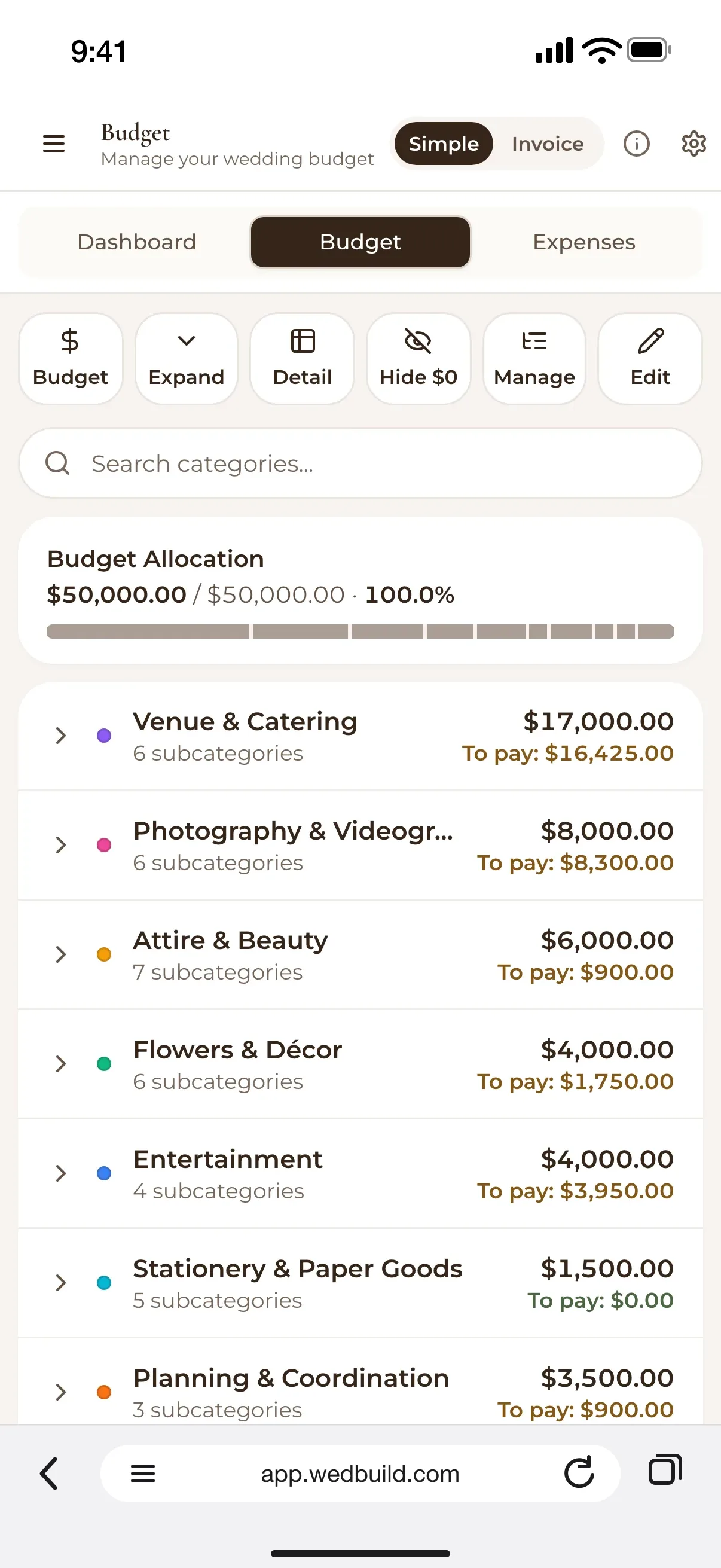
Once a date is chosen, its guest count and quotes need to stay consistent. WedBuild is one option for tracking how a date change flows through the numbers: its budget planner keeps categories, invoices and payments together, and it is on the Standard and Pro plans. The final choice should follow the complete cost of the wedding the couple wants.
Before you go
Frequently asked questions
What is the cheapest month to get married in Australia?
June and July are generally the cheapest months to get married in southern Australia, but winter is peak season in the tropical north. Queensland couples who want a cheaper date should look at wet-season shoulders, including November and March to April.
Is a Friday or Sunday wedding cheaper than a Saturday?
Friday and Sunday bookings generally have lower venue minimums or hire fees than the equivalent Saturday. Moving from Saturday to Friday or Sunday often saves as much as moving the month.
Which month has the most weddings in Australia?
The ABS’s 2024 data shows that November had the most weddings at 11.5%, with October and March close behind.
How do you negotiate a lower price for an off-peak wedding date?
Ask for the low-season, low-day rate before presenting a preferred date, and ask which available dates have the lowest minimum spend. Get every concession in writing before paying a deposit.

Written by
Henry Schofield
Co-founder, WedBuild
Henry is the co-founder of WedBuild and a chartered accountant who's spent his career helping Australian businesses get their numbers right. After his own wedding budget sprawled across three different spreadsheets, he built WedBuild's budget planner: designed by an accountant, for couples who'd rather not become one.