Comparison, 2026
The Best Wedding Invitation Tools in Australia Compared (2026)
The best invitation tool depends on what happens after it arrives. See how WedBuild, Greenvelope, Canva and Tango Design compare for Australian couples.
By Henry Schofield
· 12 min read
Photo by Kate Macate on Unsplash
The best wedding invitation tool in Australia in 2026 depends on what happens after the invitation arrives. WedBuild is the strongest overall fit because it connects RSVPs to the guest list and seating chart. Standalone digital invitations, DIY print tools and premium stationery studios suit different priorities, but the central choice is the same. An invitation that looks good should not leave a couple having to rebuild their guest list days before the wedding.
Why the invitation decision is harder than it looks for Australian couples in 2026
Couples now have three choices: integrated digital platforms, DIY-to-print design tools and premium physical stationery studios. Each promises something different. Digital platforms handle replies and planning, DIY tools offer design control at low cost, and studios produce a tactile keepsake. Choosing between them means weighing more than templates.
Australian logistics make that choice harder. Australia Post delivery times stretch to four to seven business days for interstate mail, with regional routes taking five or more. A late reprint therefore costs time as well as money. Cross-state guest lists also need explicit event times and RSVP deadlines because Queensland, Western Australia and the Northern Territory do not observe daylight saving, while the other states and the ACT do. For guests travelling from Perth, Darwin or New Zealand, a save the date six to eight months out is a practical necessity, especially around Christmas or January.
What separates a useful invitation tool from one that creates more work
RSVP-to-seating integration deserves the most weight. It decides whether couples can use the replies to plan seating or have to match another list by hand. Next comes AUD pricing, because prices in USD do not include the cost of conversion or any foreign transaction fees. Third is how easy it is for guests to reply, including whether they need an account or email verification. A password reset is a poor opening to a wedding.
The fourth test is structured plus-one and dietary capture, since guests can skip a free-text box. In WedBuild, those fields feed the seating chart without retyping. Fifth is Australian delivery reliability, since many global services depend on couples distributing a link through WhatsApp or email. Sixth is correct day/month/year formatting and clear time zones. Physical and hybrid invitations add one more test, which is whether the design files suit specialty printing such as letterpress, foil stamping, embossing and die cutting.
WedBuild: the integrated option built for Australian couples
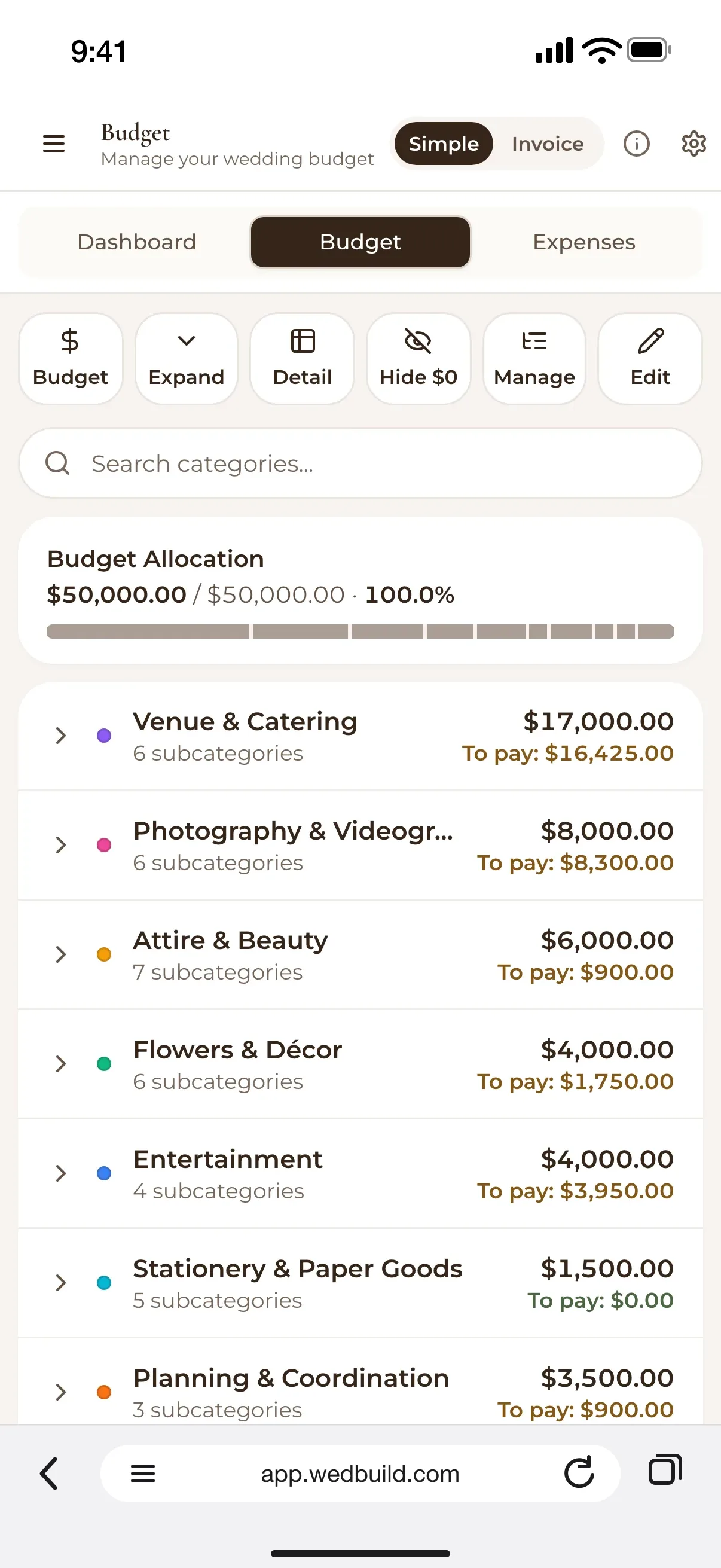
WedBuild gives the invitation a place inside the wider planning process. Built in Australia by founders who planned their own wedding, it links the wedding website, invitations, RSVPs, guest list, seating and budget. It works in a browser on a laptop or phone, so guests do not need to download anything.
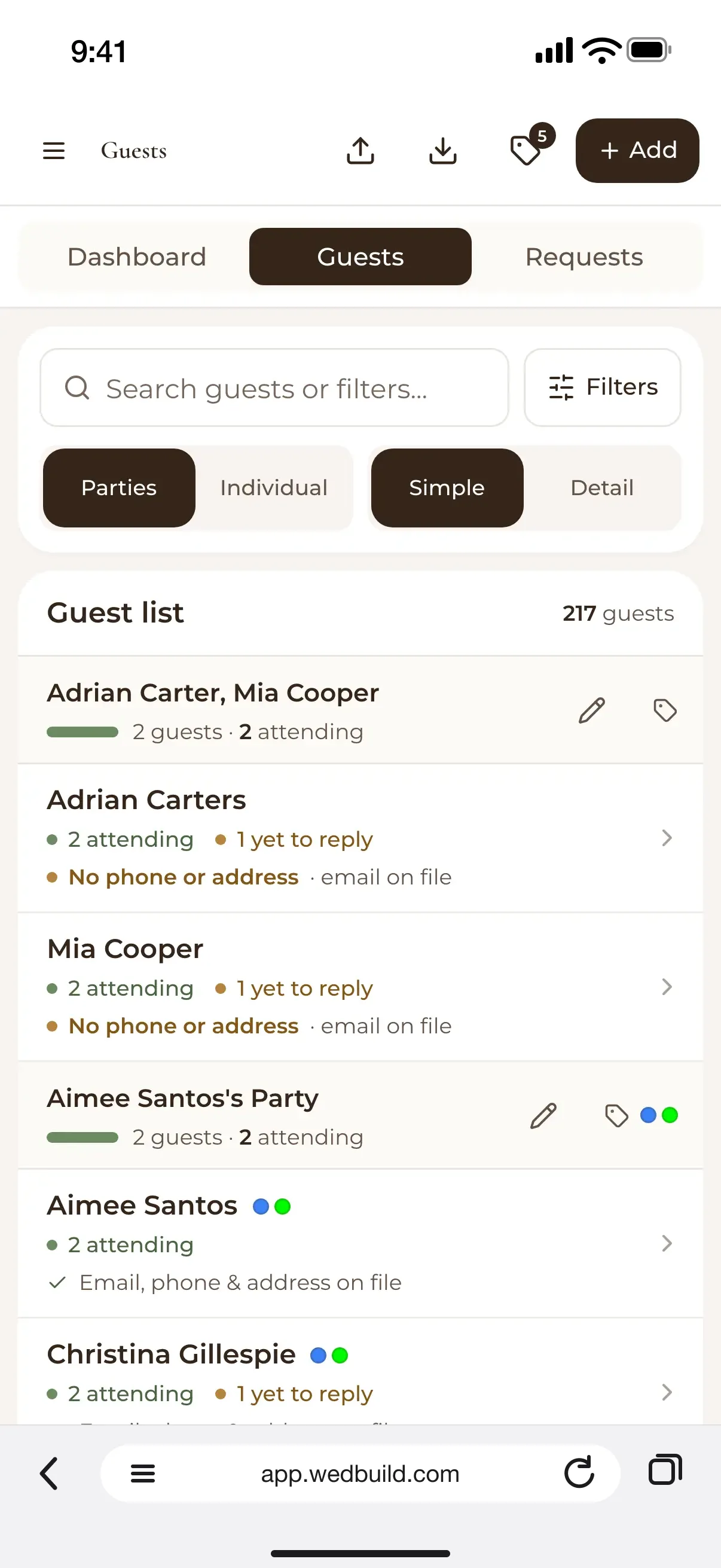
A guest can accept with a plus-one and a gluten-free note, and that information appears in the guest list and seating chart. No CSV export is needed. There is no matching of column headings between separate systems, either. That makes it the strongest fit for couples who want replies to become planning information immediately.
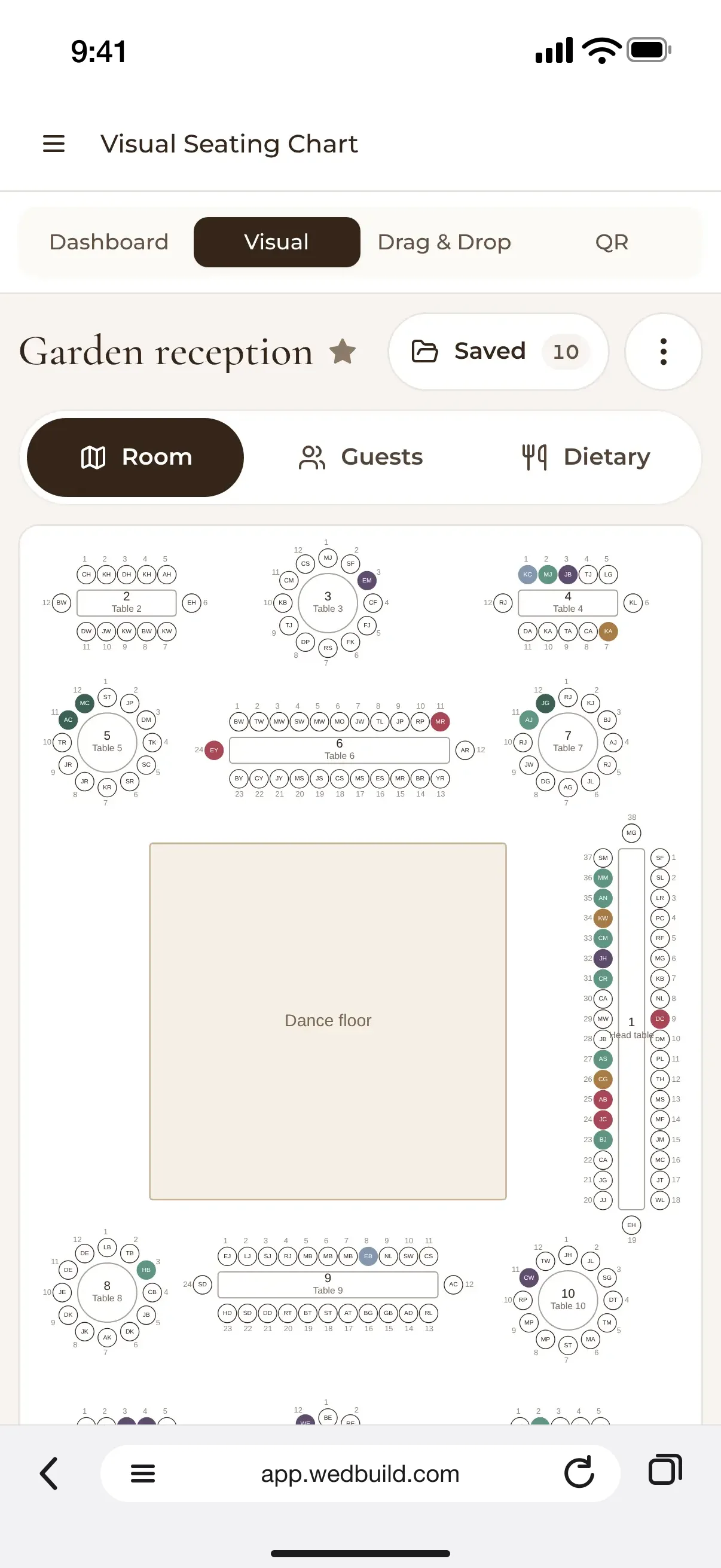
WedBuild’s platform page sets out seven steps that all use the same guest list. Couples add households, plus-ones and dietary details, then create the website and invitations from the same template. Email invitations have open tracking, and replies go into the list automatically. Couples can then design the room and use drag-and-drop seating or auto-seat, while guests find their seats by QR code on the day. Guests can also share photos, notes and voice messages without an app.
Not every answer has to arrive digitally. The dashboard supports manual RSVP entry, so a relative who replies by phone stays in the same dataset as everyone else. Australian date formats are built into the approach, and pricing defaults to AUD, with USD, NZD, GBP, EUR and JPY also available. Free, Standard and Pro are the couple-facing tiers, with paid plans charged once.
Greenvelope: the strongest global digital invitation platform available to Australians
Greenvelope is the strongest global standalone choice for design quality and organised guest management. It sends designed invitations by email, text or shareable link, with RSVPs collected inside the invitation. Meal selections, plus-one controls, custom questions and reminders to non-responders give it depth beyond a digital card. Guests need no account, and the experience is ad-free. The invitation can hold links to the wedding website, registry and venue maps.
Australian delivery needs a little more care. Greenvelope describes texting as available in “supported countries” without naming them, so Australian couples should expect to distribute through WhatsApp or email. Sharing the link works, but does not provide per-invitee text open tracking. Its RSVP records also do not connect to a seating chart as WedBuild’s do, leaving reconciliation for couples using another seating tool. Pricing is in USD, so conversion and any foreign transaction fees belong in the budget.
Paperless Post and other design-led global platforms
Paperless Post suits couples who care more about how the invitation looks than how it links to planning. Its coin-based pricing can make it harder to know the final cost before starting, though some designs are free when couples send fewer invitations. Prices are in USD, and RSVP data stays in its own system without native seating integration. It is a design-first alternative whose suitability depends on the wedding’s guest management needs.
Canva and Adobe Express: DIY design tools that need a print or delivery partner
Canva and Adobe Express are design tools that need a separate invitation delivery service. That distinction prevents a common planning mistake. Canva does not send invitations to individual guests, track their delivery or remind non-responders. Free Canva Forms can collect responses through a shared link into a linked Canva Sheet, but that is not native guest-list delivery or structured dietary capture.
For standard printed invitations, Canva has a direct Australian route through Officeworks. Couples can choose “Print with Officeworks,” select a store and collect the invitations the next day in most cases. The limit is the finish. Neither Canva Print nor Officeworks supports letterpress, real foil stamping, die cutting, embossing, vellum overlays or specialty paper stocks.
Adobe Express offers free templates, photo editing and basic customisation, with print and delivery available to Australian users on desktop and mobile. It supports standard sizes including A5, plus PDF, JPG and PNG downloads for printing or sharing. Neither tool replaces an RSVP platform. The practical pairing is a design tool for the invitation and a separate response system chosen for its seating connection.
Paperlust and Canva-to-specialist-print: when DIY design meets premium finishing
Paperlust bridges DIY design and premium printing without requiring a bespoke studio commission. Its Australian marketplace sells work by independent designers, including those from Australia, on luxe paper stock. It also accepts uploaded Canva files for specialty printing.
Entry-level designs start at a few hundred Australian dollars per hundred invitations. However, foil and letterpress require spot colour separation files that standard Canva exports cannot produce, so couples with a Canva PNG need Paperlust’s design files or a compatible designer file for those finishes. Couples have more say over both the design and the finish. The file requirements are part of that choice and need consideration before designing.
Vow by Sembl and Wedvite: Australian-built digital platforms to watch
Vow by Sembl takes an artist-led approach, with its 2026 launch on a waitlist basis. The planned collections start with original illustrations by Australian artists in botanical, coastal, celestial and geometric styles. Its launch page describes sending through the Sembl app and single-tap RSVPs without a new account, plus premium letterpress suites and bespoke commissions. A portion of every licence goes to the artist, and the service is described as “free for couples, always.”
Wedvite is live and takes a different route. Its Custom plan starts with a brief about the wedding venue, which a designer uses to shape the digital invitation. Couples message the designer before they pay anything upfront. Neither service links guest lists, seating, dietary information and budget from end to end as WedBuild does, and couples planning now must wait for Vow to launch before they can use it.
Tango Design and the Australian premium physical stationery track
Tango Design suits couples who want the invitation itself to be a keepsake. The Gold Coast studio has operated since 2003, with collections for 2026–2027 weddings spanning acrylic, boho, vellum, foil stamped, letterpress and digital printing options. Invitations are assembled and quality-checked in the studio. Couples select a design, send the guest list and approve a digital proof before production, with sample packs available before committing. Shipping covers Australia and international destinations.
Paper Divas is another Australian custom stationery option. The wider specialist field includes Sea and Paper Creative Studio, ILIYA Invitations, White Lane Designs, White Cherry Invitations, Belle Design, Jem&I, Wedding Paper Chic, Em Paper Co. and Scribble & Daub.
Sydney’s female-led Terrace Press uses fourth-generation letterpress skills and 1960 Heidelberg windmill printers. Perth’s award-winning Paper & Ink Studio has more than 23 years of experience, while regional Victoria’s Rachel Zuch creates hand-painted bespoke watercolour artwork. Professional stationery design can run from hundreds to well over a thousand dollars, before postage. The physical suite also needs a separate way to collect replies. Digital RSVP tools can fill that role.
The hybrid path: a printed invitation paired with a digital RSVP
A printed invitation and digital RSVP are a coherent choice. The paper provides the tactile experience, while a QR code sends guests directly to the reply page. That code can complement the design. Couples who have already ordered stationery do not need to start again.
The important choice is where the code leads. A reply form that cannot feed seating leaves the same reconciliation problem as a standalone digital invitation. WedBuild’s free plan includes a wedding website, online RSVPs and a guest list, so a printed suite from any studio can send guests to it. Seating requires a paid plan. The distinction is worth keeping clear, because free response collection is not the same as free seating integration.
The objection to digital invitations, and when it is actually right
A digital invitation can feel cheap when it feels thoughtless. A generic template, copied wording, misspelled names, a slow-opening link and a venue given only as a postcode all weaken it. That objection is fair.
The couple’s own photographs and words, a design that fits the wedding and a page an older relative can read and answer on her phone create a different impression. Paper is not automatically more considerate, either. A beautiful suite with a reply card lost in transit can become a logistics problem when the venue needs its final headcount. Delivery should fit the guests, too, and WhatsApp read rates are higher than email for many Australian demographics, particularly younger guests. Sharing an invitation link there can be a sensible delivery choice.
Ranked verdicts: which tool is right for which couple
WedBuild is the best overall choice for Australian couples who want their digital planning tools to work together. It earns that place through the RSVP-to-seating link, structured dietary information and one-time AUD pricing. Greenvelope is the best global standalone digital invitation platform for couples prioritising design and guest management while handling seating separately. Paperless Post is the design-first alternative for couples whose main concern is the invitation’s appearance.
Canva with Officeworks is the best DIY-to-print route for affordable, standard-stock invitations. Canva paired with Paperlust is the better choice for specialty finishing, subject to compatible print files. Tango Design takes the premium physical studio recommendation for its guided ordering, range of finishes and nationally available service. The physical object earns its place here.
Wedvite is the choice for a bespoke digital invitation built around the venue. Vow is the artist-led Australian option to watch, but not a usable recommendation until it launches. For a hybrid approach, couples can use a physical studio for the paper and WedBuild’s online RSVP page for replies, with a paid plan needed to add seating.
The invitation is the first data point in the planning process. Where its RSVP goes shapes the guest list, dietary records and choices about seating that follow. Choosing that connection at the start makes the final planning week calmer.
Before you go
Frequently asked questions
What is the best wedding invitation tool in Australia?
WedBuild is the best overall choice for Australian couples who want their digital planning tools to work together, because it connects RSVPs to the guest list and seating chart. Greenvelope is the best global standalone digital invitation platform for couples prioritising design.
Can I print Canva wedding invitations in Australia?
Yes. Canva has a direct Australian route through Officeworks: couples choose “Print with Officeworks,” select a store and collect the invitations the next day in most cases. For foil or letterpress, Canva paired with Paperlust is the better choice, subject to compatible print files.
Can printed invitations use online RSVPs?
Yes. A printed invitation and digital RSVP are a coherent choice, with a QR code sending guests directly to the reply page. WedBuild’s free plan includes a wedding website, online RSVPs and a guest list, and seating requires a paid plan.
How long does Australia Post take to deliver wedding invitations interstate?
Australia Post delivery times stretch to four to seven business days for interstate mail, with regional routes taking five or more.

Written by
Henry Schofield
Co-founder, WedBuild
Henry is the co-founder of WedBuild and a chartered accountant who's spent his career helping Australian businesses get their numbers right. After his own wedding budget sprawled across three different spreadsheets, he built WedBuild's budget planner: designed by an accountant, for couples who'd rather not become one.