Wedding Planning
What Gets Lost When a US Wedding Platform Is Localised for Australia
Currency and flags aside, US wedding tools miss Australian needs.
By Henry Schofield
· 10 min read
A US wedding platform can look Australian without working for an Australian wedding. This article examines what gets lost when localisation stops at the currency, timezone and flag. If the vendors, bank connections, budget assumptions and planning rules stay American, Australian couples have to fill the gaps themselves.
Why "localised for Australia" usually means cosmetic changes only
US wedding platforms take up much of the space in search results and roundups around the world, so Australian couples often find them before they find local options. An Australian landing page can make that first encounter feel like a good fit. But presentation is not the same as function. A timezone selector changes how a date appears while leaving the deadlines a checklist includes unchanged. An Australian dollar symbol changes a label while leaving the assumptions behind an estimate unchanged.
Structural localisation goes deeper than what appears on screen. It changes the systems that help couples find suppliers, receive gifts, plan spending and pass guest information to a caterer. Those systems reflect the market a platform was built to serve. A business built around US vendor advertising, retail partnerships and legal requirements does not become Australian because its landing page changes. The rest of this article maps exactly where the skin ends and the gap begins.
How the vendor directory failure shapes the whole platform experience
For most large US wedding platforms, the vendor directory is the product around which everything else is built. Checklists, budgets and guest lists help keep couples on the platform while they look for and book suppliers. That makes an empty local directory a load-bearing failure. The other tools may still work, but they no longer have the main purpose that brought them together.
An Australian couple can therefore spend time learning a platform while still needing to find local suppliers elsewhere and bring that information back into its planning tools. This changes what the platform is worth. A useful guest list or checklist becomes a standalone convenience rather than part of a connected route from discovery to booking.
The directory's business model also shapes its usefulness. Directories that earn money from vendor enquiries let suppliers pay to stand out, so how much a supplier stands out says little about how good they are. Where there are no Australian listings, there is no local marketplace to navigate at all. A platform's value may depend on a directory that Australian couples cannot use.
Registry and cash funds wired to US banking infrastructure
Money exposes a harder limit than missing listings. Cash funds built around US banking infrastructure can require a US bank account and a US address before couples can receive gifts. Those conditions belong to the financial layer underneath the interface and remain in place when settings change, including when the currency display is Australian.
For an Australian couple, those banking requirements can prevent guests from giving. A feature that looked available during setup may be unusable for its intended purpose, leaving the couple to explain the problem. Registry retail partnerships can create a similar mismatch when the available shops serve the US market.
Couples can skip the registry and use only the planning tools. That is a valid workaround, but not a localisation fix. They still spend time learning and keeping up a platform whose main feature they cannot use, and moving to another one later adds more work.
Why Australian budget planning requires a different structural model, not a currency swap
A budget tool becomes misleading when it changes the currency but keeps the original pricing model. Most Australian venues price per head, while common US models treat venue hire as a flat fee. That difference affects how the budget responds to guest numbers. A tool built around a fixed venue cost cannot get the price of a package right when it changes with the number of guests.
Venue and catering dominate Australian wedding spending by a wide margin. Getting that category wrong therefore distorts the whole plan. A useful model needs to represent the relationship between headcount and catering costs rather than treating those inputs as separate details.
Location adds another layer to the calculation. Wedding costs vary widely between Australian cities, with meaningfully different spending patterns across New South Wales, Victoria, Queensland, Western Australia and South Australia. A US-calibrated national estimate conceals that spread. Once bookings begin, tracking actual invoices and payments records commitments, while a generic calculator continues to predict them.
The Australian legal timeline that no US checklist surfaces
Australia's Notice of Intended Marriage, or NOIM, must be lodged with an authorised celebrant at least one calendar month and no more than 18 months before the ceremony. If couples miss that minimum deadline, they risk having a ceremony that is not legal. A checklist built solely around US marriage requirements has no reason to include this Australian obligation.
Australia's peak wedding season runs October through April, the reverse of the season in the Northern Hemisphere. A booking schedule calibrated to northern spring and summer can therefore apply the wrong seasonal logic. Planning an Australian wedding also means booking suppliers who must be free on the date, including the venue, celebrant and photographer, before filling in the rest.
Caterers in Sydney, Melbourne, Brisbane and Perth typically require final numbers one to two weeks before the event, so RSVP timing has practical consequences. These are distinct deadlines with different purposes. The NOIM is the sharpest test of whether the checklist understands the wedding it is helping to plan, because it governs whether the ceremony can legally proceed.
Where RSVP data breaks down on the way to the seating chart
Four details need to pass from an RSVP to the seating plan: whether the guest is coming, whether they have a plus-one, which meal they prefer and what dietary restriction they have. Some tools transfer names cleanly but leave dietary information behind. A populated chart can still be operationally incomplete. It shows where guests sit without showing which seats need particular meals.
Missing dietary information becomes a problem in the seating plan when RSVPs close and catering deadlines approach. The couple then has to reconcile responses with the seating plan during an already busy part of planning. Digital RSVPs are the established standard for modern Australian couples, so this handover is part of the main coordination process.
Weekend weddings make the handover more demanding. Friday welcome drinks may need only a headcount, while Saturday's reception needs details of what guests can eat and where they sit, and Sunday brunch needs dietary notes again. A template built for one day cannot meet those different needs just by collecting more names. The useful endpoint is not an RSVP dashboard but a caterer-ready document showing who is attending, where they sit and what they need on the morning of the wedding.
Why Australian dietary complexity exposes the limits of a freeform text field
In cities such as Sydney and Melbourne, dietary planning can include halal and kosher requirements, allergies and personal preferences. Those needs are not interchangeable. A single freeform text box can record what a guest types, but recording words is not the same as organising information for service. Without structure, the seating tool cannot reliably turn those responses into a table-level dietary map or flag conflicts.
Gledswood Estate in NSW provides a concrete example of the required output. Its coordination checklist calls for a full seating chart four weeks before the event, with dietary requirements marked next to each guest's name. The listed main catered-for categories are vegetarian, vegan, gluten-free, dairy-free and nut allergy. Gledswood considers the information finalised once the chart is submitted.
That requirement applies specifically to the venue. It nevertheless shows why a general dietary notes field may fall short of an actual handover document. Couples can manually reconcile an RSVP export with their seating chart, but that recreates the missing connection in a spreadsheet. The software has collected the information while leaving the hardest part of using it to the couple.
How AI tools trained on US data introduce a new localisation failure surface
AI planning assistants can reproduce the same US assumptions in a more convincing form. Instead of presenting a generic checklist, they can generate a plan that sounds tailored to the couple. Budget estimates, supplier sequences and booking timelines can still reflect US costs, laws and seasons.
A model trained on US wedding information does not gain Australian planning knowledge from an Australian flag in the interface. Without that knowledge, it can omit the NOIM, apply the wrong peak season or fail to model Australian per-head catering. These are the same structural gaps expressed as recommendations. The apparent personalisation can make the mismatch less obvious than it would be in a fixed template.
As AI adoption in wedding planning grows, more couples are exposed to this additional source of error. New technology may widen the localisation gap when an assistant turns unsuitable assumptions into a detailed plan. Its advice needs to reflect Australian requirements.
What structural localisation actually looks like in practice
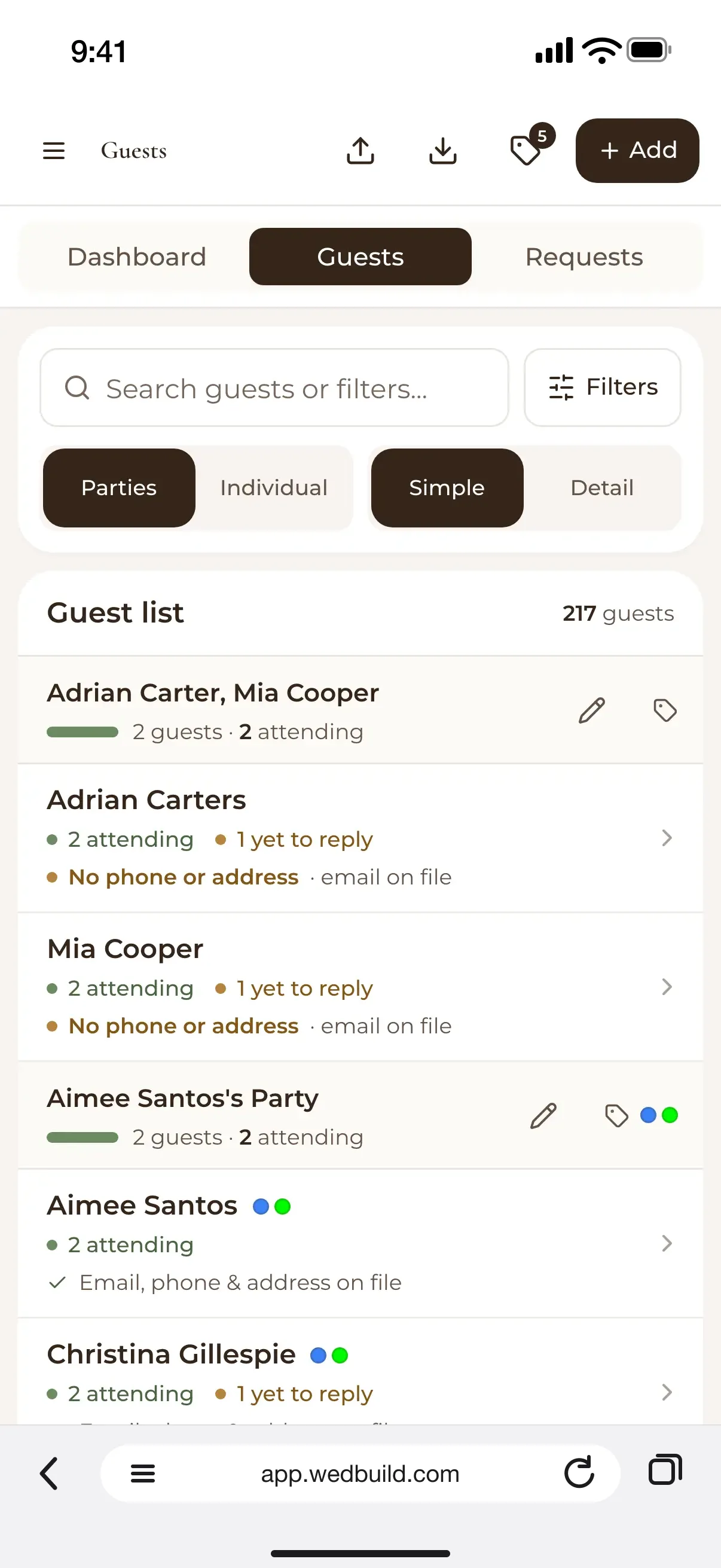
Structural localisation starts with the wedding being planned, rather than with new labels for a finished US product. Its budget model uses Australian prices, its checklist covers what couples must do in Australia, and its guest records hold the dietary information needed later. Connected tools then preserve those details through each handover. For larger weddings, that continuity reduces the need to reconcile RSVPs, seating, dietaries and payments across disconnected systems.
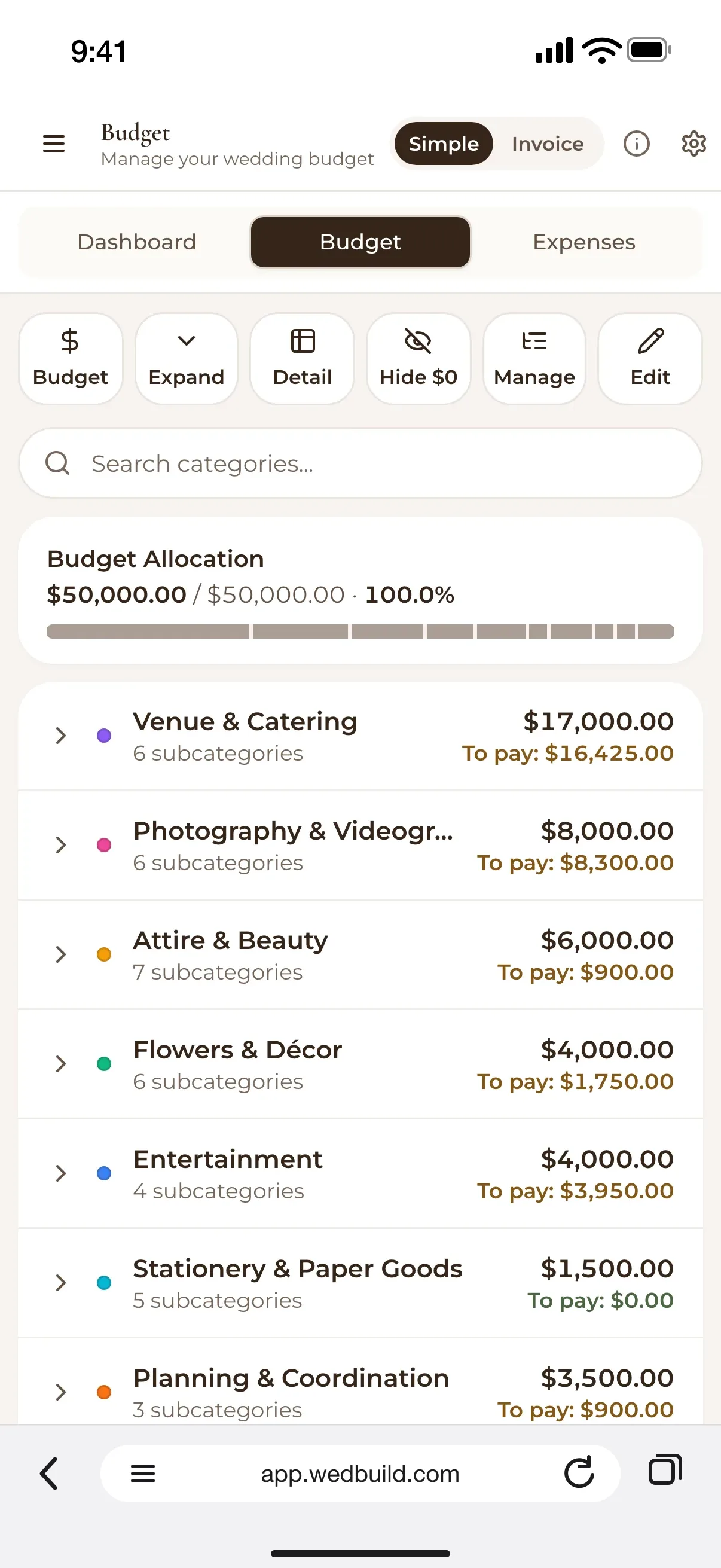
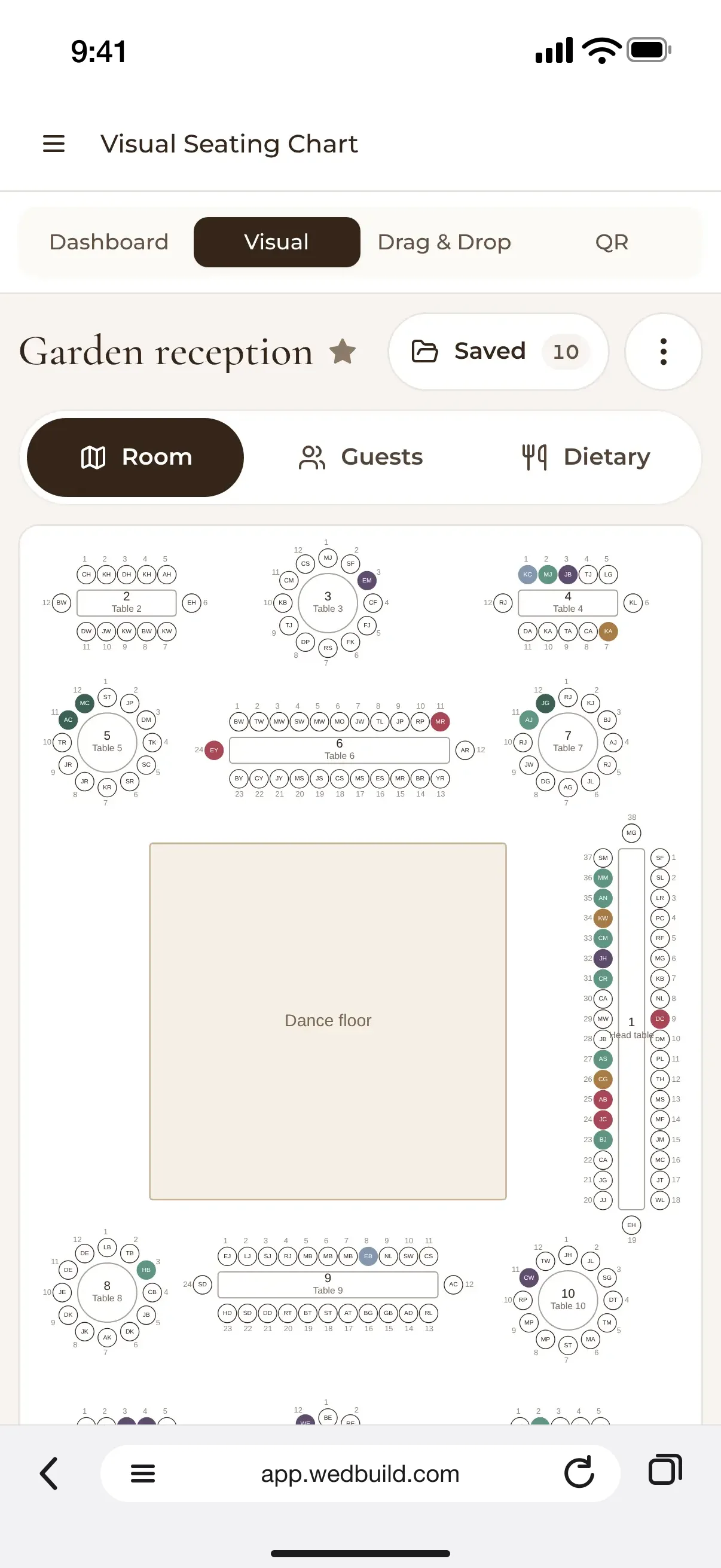
Wedbuild is one Australian-built option, an all-in-one planner whose vendor tracker connects with budget and guest data so couples can compare and track suppliers they have found themselves. It offers multi-event RSVPs, structured dietary tracking through seating charts and table cards, and invoice and payment tracking, but has no vendor directory or native mobile app.
A couple seeking supplier discovery still needs a local directory, while a couple seeking connected administration has a different requirement. A directory-first service and a planning-first service do not have to solve the same problem to be useful. Evaluation before commitment also helps expose those differences, rather than leaving couples to discover missing connections after their information is already spread through a platform.
Couples should judge a platform by its workflow. A locally built product still needs to demonstrate the functions a particular wedding requires, including any legal or banking features it claims to provide. Local origin alone is not proof that every structural test has been met.
A practical checklist for evaluating whether a wedding platform is structurally localised
Does the vendor directory include Australian listings, or does it default to US suppliers? If the platform has no directory, does it clearly support comparing and tracking vendors found elsewhere? The distinction should be explicit before planning begins.
Can cash funds be received into an Australian bank account without a US address? A currency selector does not answer that question. The relevant condition is whether the couple can actually receive the money.
Does the budget tool use per-head catering as one of its main ways to work out prices, with cost data for Australian cities? Does it keep track of actual invoices and payments once suppliers are booked?
Does the checklist include the NOIM deadline and October–April peak-season booking logic? Does its sequence account for date-critical suppliers and catering deadlines?
Does the RSVP system collect structured dietary information for each guest and transfer it automatically to the seating chart? Can that chart produce a named, seat-level dietary document ready for the caterer? A successful name transfer is only part of the test.
Does the platform support separate RSVPs for weekend events with different information requirements? Can welcome drinks, the reception and brunch each collect what they need?
If an AI assistant is included, what training data does it use, and does its advice surface Australian legal and seasonal requirements? The gap between skin and structure is exactly the gap these questions expose.

Written by
Henry Schofield
Co-founder, WedBuild
Henry is the co-founder of WedBuild and a chartered accountant who's spent his career helping Australian businesses get their numbers right. After his own wedding budget sprawled across three different spreadsheets, he built WedBuild's budget planner: designed by an accountant, for couples who'd rather not become one.