Wedding Planning
Summer Christmas Weddings and the Vendor Calendar Logic Australian Platforms Must Have Built In
Planning software that assumes a Northern Hemisphere Christmas misleads Australian couples.
By Henry Schofield
· 10 min read
Summer Christmas weddings expose a basic flaw in wedding planning software. A calendar built for Northern Hemisphere seasons can give Australian couples the wrong advice on when to book, which flowers to choose and how much to budget. Correct planning logic must start with the wedding’s state, month and holiday constraints, then shape the checklist and vendor decisions from there. An Australian currency setting is not enough.
Why Australian summer and Christmas fall in the same season, and why most planning platforms don't know it
A couple searches “Christmas wedding” and trusts the platform’s advice on flowers, food and booking dates. The season underneath it is wrong. Snow, fireplaces, warming menus and thick floral arrangements suit a different kind of Christmas, but the platform may show them without saying that its planning advice is based on Northern Hemisphere seasons.
The Bureau of Meteorology defines Australian spring as September–November, summer as December–February, autumn as March–May and winter as June–August. Christmas Day therefore falls in early summer. Changing the date format does not repair the advice generated from those assumptions.
How autumn dominates the Australian wedding calendar, and what that means for a couple choosing December
Autumn is Australia’s most popular wedding season, with March, October and November among the busiest individual months. July is the quietest. Summer accounts for a smaller share of weddings than autumn or spring, while January offers a low-competition window. The domestic demand curve does not follow Christmas enthusiasm.
For a December couple, that means choosing a different competitive landscape from the one facing most autumn couples. Vendor demand, pricing pressure and weather risks change together, rather than following one universal “busy season” rule. December is a deliberate departure. A useful platform would reflect that difference in its advice instead of giving every couple the checklist for the busiest months. However, lower summer demand is only the starting point, because the Christmas break creates its own restrictions.
The two distinct problems inside "a December wedding": the early-December crowd and the late-December vendor blackout
Early December is festive and genuinely popular. Mid-to-late December presents a different problem, as Christmas travel competes for guests and many premium vendors begin their summer holidays. December–January also leaves less time for planning meetings because many Australians take long breaks. Some preferred suppliers are simply unavailable in late December and January, regardless of how far ahead a couple asks.
An available venue date is not an available wedding team. A couple might find an opening in the venue calendar while the premium vendors they want are on holiday. A platform that treats those two kinds of availability as interchangeable gives false reassurance. Booking earlier cannot solve a supplier’s decision not to work that date.
Early December calls for popular-date booking advice and standard summer lead times, while late December needs blackout warnings and greater urgency around preferred suppliers. January can offer lower competition on price and dates, but vendor availability still needs direct confirmation. The warning belongs in the planning flow, before the couple mistakes an open venue calendar for a workable plan.
Queensland inverts the national model entirely, which breaks any platform that treats Australia as one climate
Queensland is the stress test for this approach. In Brisbane metro, winter is the peak wedding season, from June–August, and premium venues are booked 18–24 months ahead. January and February bring extreme heat and humidity warnings and are discouraged for outdoor events. A template for the whole country that shows summer as a good, quiet time to wed can steer a Queensland couple towards the wrong weather.
December and January add storm risk and 27–31°C heat to the travel and supplier-holiday constraints that apply nationally. That changes the calculation. The quiet-season savings argument available in Victoria or NSW is largely inapplicable in South-East Queensland, where weather changes the value of the date itself. An Australian platform needs rules for each state, as one season setting for the whole country cannot cover those differences. Otherwise, it repeats the Northern Hemisphere error on a smaller map.
Heat is a planning variable with direct consequences for catering, flowers, and the ceremony timetable
For a December or January wedding, ceremonies should run before 11am or after 5pm, with shade, fans, marquees or air-conditioned spaces treated as requirements. Couples also need to rethink their plans for chocolate desserts and soft flowers when the wedding is outdoors in summer. These are practical constraints.
Hydrangeas make the problem plain. Without water at all times, they wilt almost at once at an outdoor summer ceremony. A flower guide based on UK or US seasonal assumptions may not flag that risk, and a generic florist brief may leave it unresolved. The couple then discovers a logistics problem where the platform presented an aesthetic choice.
The same shift applies to food. A January menu in Adelaide or Melbourne built around fresh prawns, grilled stone fruits, vibrant salads and cool desserts differs from an autumn menu at the same venue. Those choices need to inform dietary collection and per-table kitchen information. If the menu, guest requirements and seating chart stay separate, the couple must reconcile them manually, even though the software is supposed to reduce that work.
The booking lead-time ladder, and how summer and autumn pull it in opposite directions
The usual order for booking across the country is a fair starting point. Venue and celebrant bookings come first at 12–18 months out, followed by photography and video at 9–12 months. Catering, flowers, music and cake follow at 6–9 months, then hair, makeup and transport at 3–6 months. Final numbers and the run sheet come when there are under 3 months to go. The problem begins when a platform presents that baseline as a date-specific plan.
An April NSW wedding may need a venue 20–24 months ahead and a photographer 18–24 months ahead, while premium Victorian photographers for April may be booked two to three years out. By contrast, a January NSW wedding can allow a venue booking 8–12 months ahead and photography 6–10 months ahead. The summer holiday gap still qualifies that apparent flexibility.
A useful checklist therefore needs to know the month, the state and whether the date falls within the vendor-blackout period. Booking is only the first layer. The operational layer adds three waves of confirmation, with scope settled well in advance, details sent roughly a week out and a final check in the last day or two. If a vendor does not respond in time, the follow-up becomes a phone call.
What correct budget logic looks like for a summer Christmas wedding, including the January pricing paradox
State and city set different starting points for a budget. New South Wales leads Australian wedding spending, Victoria follows and Tasmania is the most budget-friendly. Sydney and Melbourne also have substantially higher baseline costs than Brisbane, Adelaide or Perth. A national average cannot explain the full cost of a particular date in a particular place.
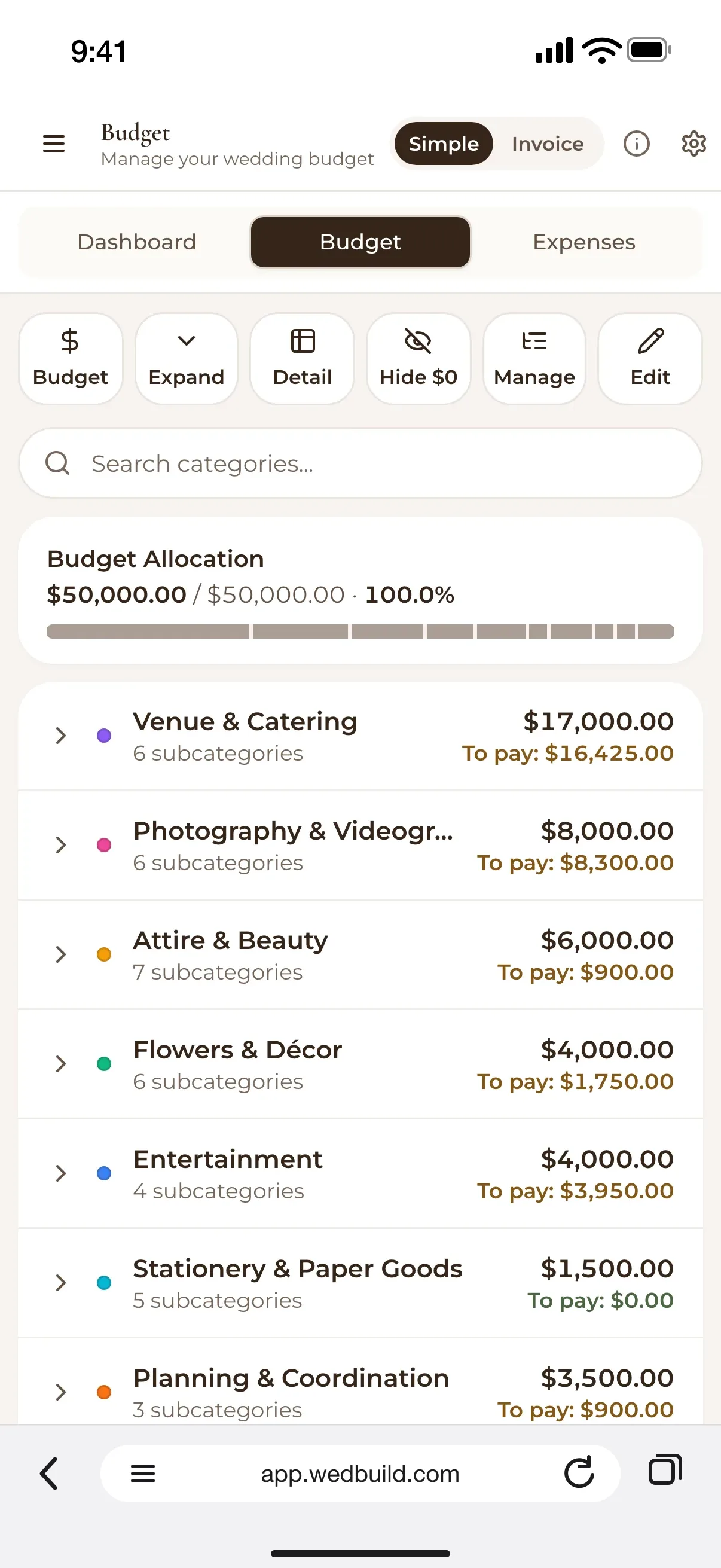
The overspend gap exposes another weakness in generic tools. Couples often finish meaningfully above their starting budget, driven largely by per-head catering costs scaling with the guest list. Most free-tier tools do not model that category well enough. A budget tracker that records a catering total without reflecting how guest numbers change it leaves a major source of pressure unresolved.
January adds a useful pricing paradox. It is summer on the calendar but off-peak on price, with meaningful savings possible in Victoria and other southern states. Correct budget logic would identify that opportunity while retaining the vendor-holiday warning, rather than offering a vague suggestion to “consider off-peak”. It would also account for the different per-head costs of lighter menus, seafood and cool desserts, instead of letting an autumn menu assumption survive until the final caterer quote.
Where the seating chart and kitchen workflow break down without seasonal dietary logic
Collecting dietary requirements through RSVPs is only the beginning. Allergies, vegetarian, vegan, gluten-free, halal, kosher, medical needs and children’s meals have to remain usable through the rest of planning. At multicultural weddings, those requirements may have religious as well as personal weight. The people who prepare and serve the food must get that information.
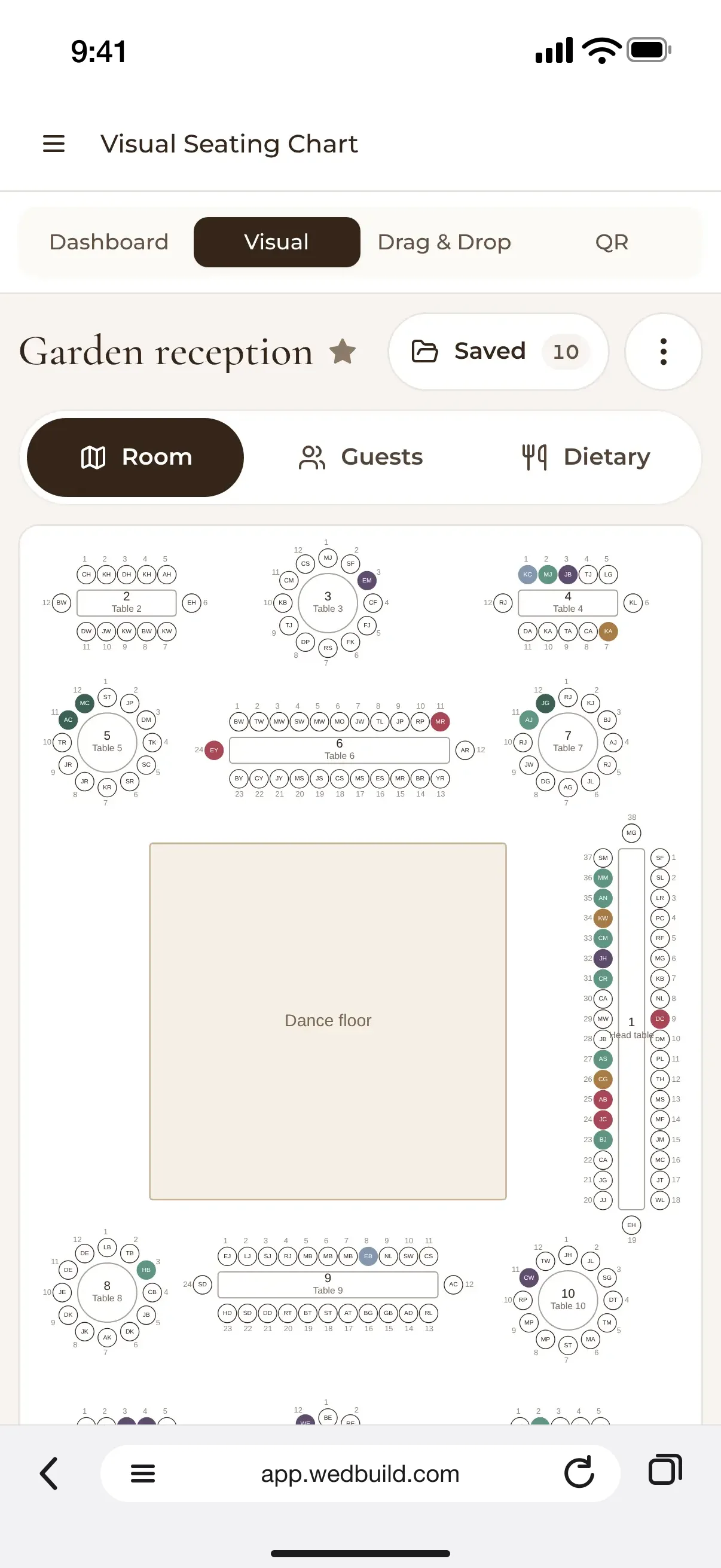
For a January Adelaide menu, the caterer needs the right meal counts for each table as well as the total guest count. This is where the seating chart becomes a kitchen document. Most free-tier tools cover who sits where but do not close the loop with a per-table meal export the caterer can act on. The missing connection leaves the couple reconciling information late in planning, when changing tools is most costly.
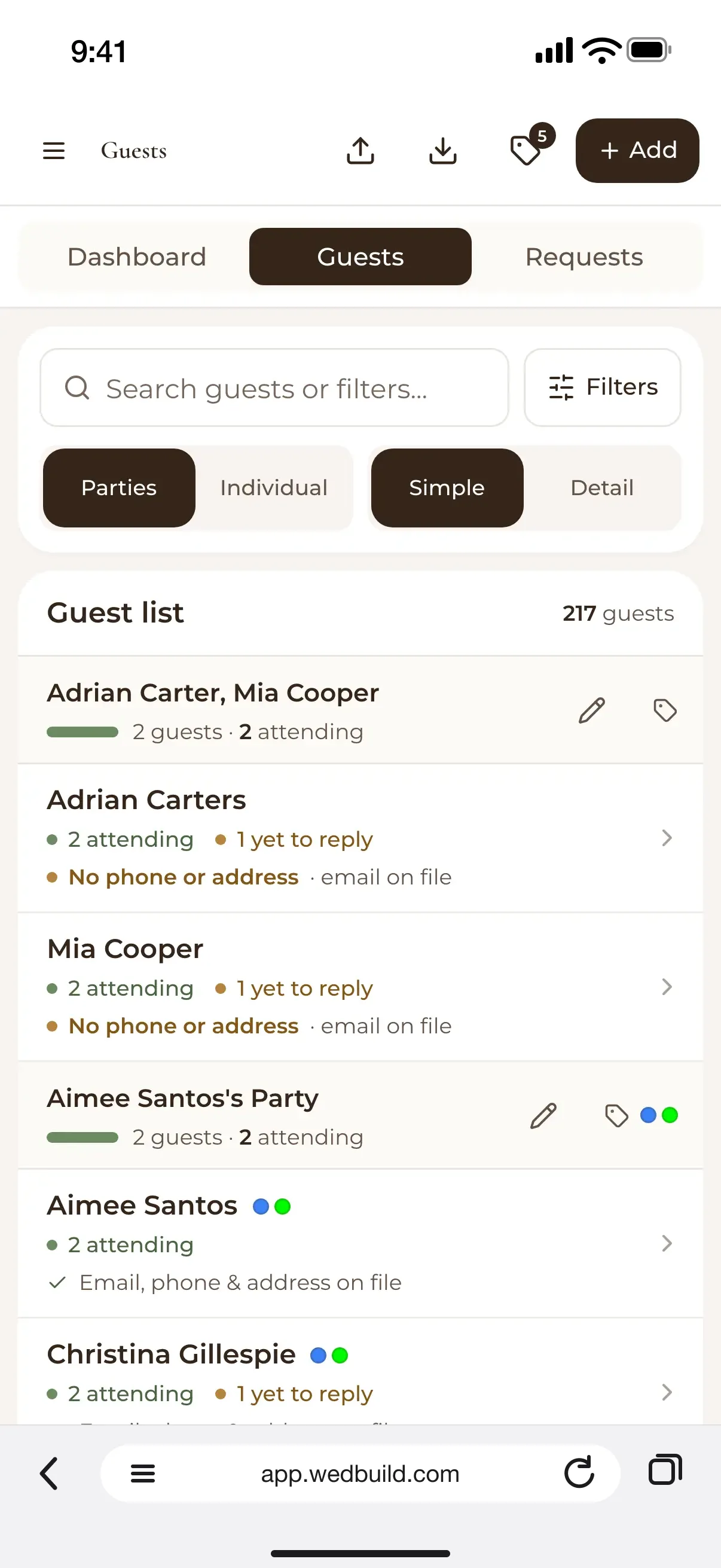
A connected workflow makes each reply useful beyond the RSVP screen. The reply updates the guest list, which feeds the seating chart and table cards with dietary legends. Guests can use a QR-code seat finder on the day, while the caterer receives the dietary information attached to the tables.
What to actually look for in an Australian wedding planning platform, and how the main options handle these requirements
A checklist needs to respond to location and date, a budget needs to reflect per-head costs, and dietary information needs to follow guests into the seating plan. These functions should work together. For a large guest list, the administrative burden lies in reconciling RSVPs, meals, seats and costs.
WeddingWire and other US-built platforms offer solid checklists and budget trackers, but their US-focused foundations need scrutiny for an Australian wedding. On some platforms, couples may need a US bank account to use cash registry features, may find no local vendors in the directories and may get seasonal advice based on Northern Hemisphere months. Those limits do not erase the usefulness of the basic tools. They do mean that a familiar interface is not proof of Australian calendar logic.
Wedbuild is an Australian-made, all-in-one planner built by a couple who planned their own wedding, with connected RSVPs, guest lists, seating and dietary table cards, plus budgeting, vendor comparison and a checklist. It is a credible option starting from local assumptions, though it has no native mobile app or vendor directory, helps compare suppliers already found, and should not be assumed to provide the state-level calendar rules described here merely because it is Australian.
What correct calendar logic actually looks like, built in rather than bolted on
Built-in logic changes what the platform produces. The checklist uses the couple’s state and month to work out booking windows, warns of holiday blackouts and gives flower advice based on Southern Hemisphere conditions. Seasonal menu and dietary guidance appears where the couple needs it in the planning flow. By contrast, an AUD symbol on a US-season template changes the display without correcting the decisions underneath.
State-level rules are the harder test. The system needs rules for Queensland’s June–August peak and summer weather risks, for the lower demand and costs in Victoria and NSW in summer, and for the late-December holiday gap that affects plans for both December and January. Separate guest, seating, dietary and budget tools cannot pass seasonal context through the whole workflow.
For couples, the practical test is direct. Does the checklist produce different booking windows for a December Melbourne wedding and a December Brisbane wedding? If not, it has not done the work. A correctly built tool should also give a December couple in Melbourne a genuinely different planning experience from a February couple in Brisbane, without either needing to understand the calendar rules behind it.

Written by
Henry Schofield
Co-founder, WedBuild
Henry is the co-founder of WedBuild and a chartered accountant who's spent his career helping Australian businesses get their numbers right. After his own wedding budget sprawled across three different spreadsheets, he built WedBuild's budget planner: designed by an accountant, for couples who'd rather not become one.