Wedding Planning
Who Pays for What at an Australian Wedding? How Couples Split Costs With Parents, Partners and the Wedding Party
Agree early on who covers what, and keep every contribution visible.
By Elise Schofield
· 9 min read
Who pays for an Australian wedding is no longer settled by tradition. Agree early on what each person can afford, be clear about any strings attached, and track what each person pays in one budget. That goes for parents, partners and the wedding party.
Why the question of who pays is harder than it used to be
A wedding bill this large is too much to leave to whoever would pay by tradition. ABIA survey data shows that the national average is well above what many couples expect, and the average in NSW is higher still. The gap between the first budget and the final spend is a consistent pattern. Someone has to cover that gap. Unless the funding is discussed early, the question returns later with invoices attached.
The old script also assumed a different household. It rested on couples marrying in their early twenties and one income earner per family, rather than partners with established incomes and financial commitments of their own. Couples now marry, on average, in their early thirties. Many already have mortgages or other demands on their money, which helps explain why self-funding has become the norm. The cost of living has led to smaller guest lists, mid-week dates and elopements, but couples who want a full celebration still have to agree on how to pay for it.
How Australian couples actually fund their wedding today
Most Australian couples either pay for the wedding themselves or share the cost with both families. One family paying for everything is largely gone. Savings are the main source of money, though they rarely cover the full bill. A substantial share of couples use a personal loan to bridge the gap, while a smaller share put costs on a credit card.
Help from parents is much harder to count on than tradition might suggest. Some couples get nothing, while a smaller group gets enough to pay for a large part of the wedding. For couples who do receive substantial help, the contribution can reshape the whole budget. It is not a sound assumption for couples who have not yet had that conversation.
Start with a budget the partners can fund without family help. That gives the couple a workable starting point. A confirmed contribution can then improve the celebration rather than make an otherwise unaffordable plan possible.
What the traditional split looked like and what survives of it
Traditionally, the bride’s family covered the ceremony and reception venues, catering, flowers, cake, photography, music, invitations and the bride’s gown. The groom’s side covered celebrant fees, the honeymoon, transport and the rehearsal dinner, while the groom bought the rings and the bride’s bouquet. These assignments were made regardless of what each household could afford. The groom’s family still hosts or pays for the rehearsal or welcome dinner in keeping with tradition, though couples or both families now often share or take on that cost.
In Indian-Australian communities, it is still a custom for the bride’s family to pay for the ceremony and the groom’s family to handle the reception. In Chinese-Australian communities, both families often talk through who will pay for what. None of these patterns guarantees a fair fit for two households with unequal means. Knowing the convention is useful because it lets couples name an expectation in conversation before plans are made.
How to have the money conversation with parents
Have the conversation before paying the venue deposit. Once the venue is locked in, much of the wedding’s financial shape is fixed, and a request for help can put parents in an uncomfortable position. Before approaching them, agree with your partner on a budget you can manage yourselves. Bring a total and a breakdown.
A specific question is kinder than a vague invitation. Explain the amount you are planning around and ask whether they are in a position to contribute anything. That leaves room for an honest answer, including no. A broad request for help may get a warm reply without giving you an amount to work with.
Speak with each set of parents separately. People can be more candid about their finances without another family listening, and a joint meeting invites comparison even when nobody intends it. Do not pass one family’s contribution figure to the other. Different amounts are not the problem in themselves. Judging how generous each family is by how much it gives makes things harder.
When someone offers help, clarify roughly how much they mean, whether it is a fixed contribution or an open-ended commitment, and whether they expect a say in guest numbers or particular choices. These are reasonable questions about a shared plan. An offer to help where possible sounds generous but cannot be entered as a dependable amount in a budget. Leaving it vague postpones the awkward conversation until final invoices arrive, when there is less room to change course.
If both families want to work together, each can take on a different cost. One might pay for florals while the other pays for photography, without either having to match what the other spends. Establish kindly whether the money is a gift with no conditions or an investment that comes with shared decision-making rights. The distinction is not how generous the offer sounds, but whether it also buys a say.
Who pays for what in the wedding party
Wedding party members traditionally pay for their own dress or suit, while the couple usually covers professional hair and makeup, bouquets or boutonnieres, transport to and from the venue, and food and drink on the day. Discussing these defaults and agreeing who covers each expense avoids leaving friends to discover the cost of their role as plans unfold.
The attire convention is also softening where couples require a particular look. Custom suits and matching designer gowns may cost more than some wedding party members can afford, even if they are happy to buy an outfit. A specific requirement changes the financial expectation. If that look is important to you, expect to contribute to the cost or cover it fully.
Hens and bucks celebrations have a different usual split. Attendees generally share the cost and cover the guest of honour’s portion. Wedding party members also still tend to give a wedding gift, but the amount should reflect what they have already spent. That total deserves a place in the couple’s thinking. Someone who has paid for a dress, alterations, shoes, hair, makeup and a share of the hens has already contributed substantially, even before a gift is wrapped.
Which cost-splitting approach suits which couple
An equal three-way split suits couples whose two families have similar means and similar stakes in the wedding. The couple and each family cover one-third. Its appeal is a clear division, but that division only works if all three parties can afford it. Equal shares are not automatically fair shares. When people have different amounts to spare, making them pay the same can leave them feeling bitter.
A lump-sum gift suits couples who want to keep planning control and families who want to contribute without directing choices. Each family gives an agreed amount, and the couple decides how to allocate it. This also works when contributions are unequal. Each side can give what it can afford without having to fund a matching portion of the celebration. The arrangement depends on everyone understanding that the contribution does not come with influence attached.
A per-head model is useful when the guest list is contested. Total reception costs are divided by the guest count, and each family pays for the guests it invites. That makes the cost of an invitation visible. It also gives each family a direct financial stake in the size of its own list. Because this model addresses reception spending, it should not be mistaken for an answer to every other wedding expense.
Itemised sponsorship suits blended or complex families where matching contributions is impractical but people want to fund something recognisable. Each party takes on a named expense, such as photography, florals or the welcome dinner. The contribution has a clear purpose. It need not cost the same as another family’s chosen item to be meaningful.
None of these models is the correct choice for everyone. Choose the arrangement that fits the people involved, rather than treating an inherited pattern as an obligation. Exact matching is neither expected nor usually practical. Whatever the split, record each side’s contribution separately against a single master budget. Otherwise, even when each offer is clear, the full budget may still have gaps or count the same money twice.
Tracking contributions against the budget so nothing surprises you on the day
A promise becomes useful when it is recorded against the expense it will cover. Put the agreement in writing when it is made, using a shared document or budget tool to note who is paying for what. This need not become a legal contract. It is a way to preserve the details between the first conversation and the final invoice. Where contributions are unequal, the record should make responsibilities clear without becoming a comparison of family generosity.
Keep paying and deciding separate in that record. A family covering catering does not automatically get to choose the menu, unless that was part of the agreement. Include any agreed expectations so that a payment does not quietly become permission to take over a choice.
The master budget also needs a contingency buffer from the start. Overspending is common enough that a plan with no room for it is fragile, even when every promised contribution arrives. Extra charges can accumulate across vendors, including cake-cutting fees, furniture hire, overtime, service staff tips and playlist extensions. The first quote is not the whole picture. A line for vendor extras includes those costs in the total.
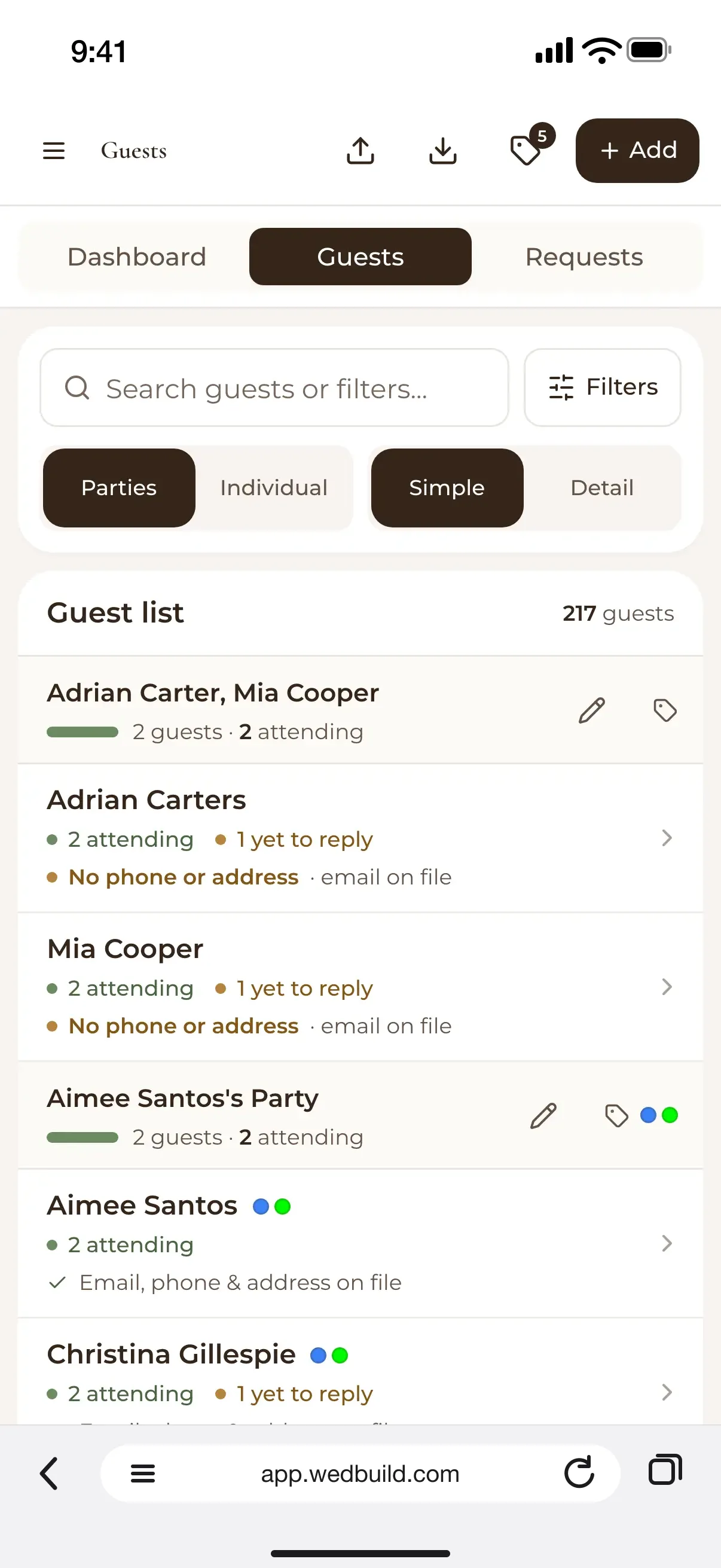
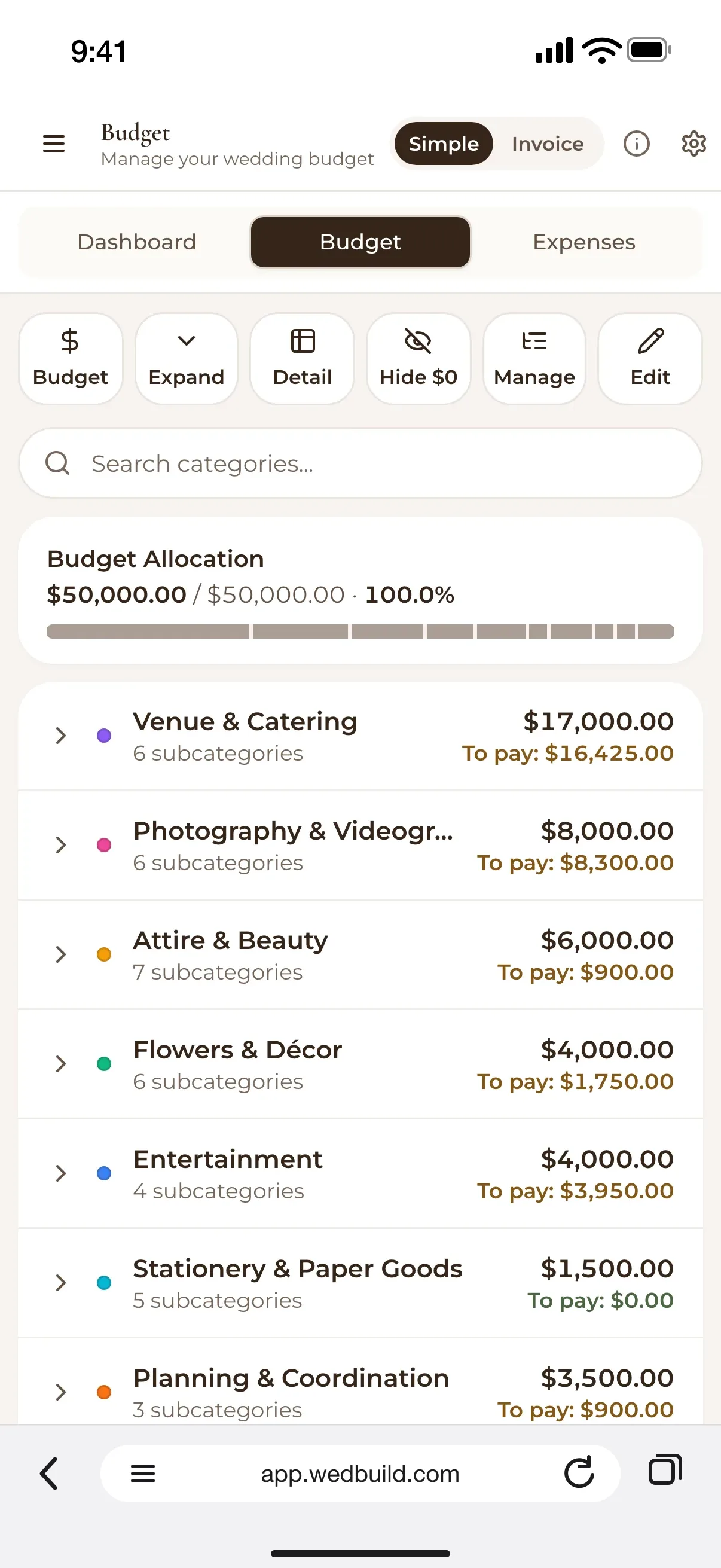
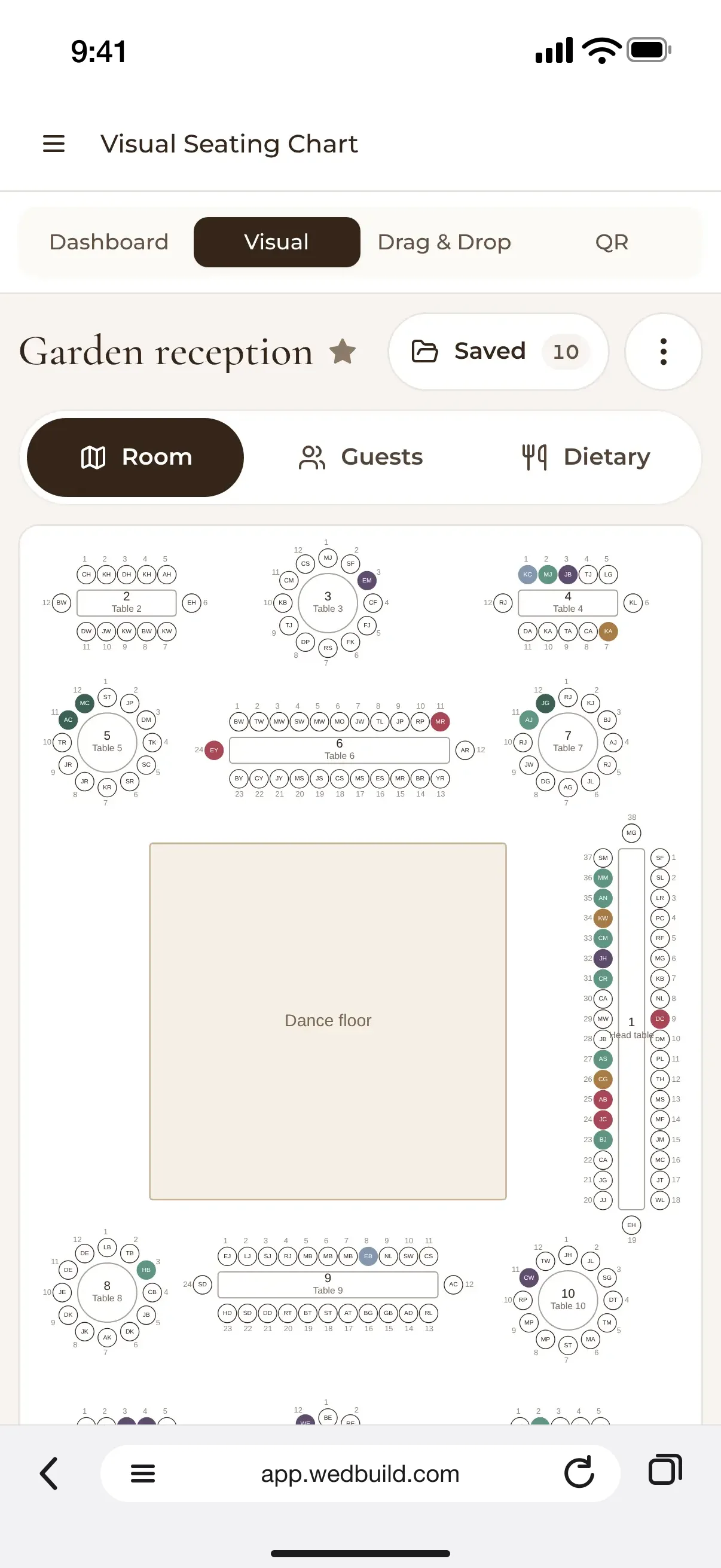
For couples choosing a tool, Wedbuild’s all-in-one wedding planning app includes a budget planner designed by an accountant that records contributions by source, tracks spending by category and shows the remaining balance. It links to the guest list and seating chart, so changes in guest numbers update the per-head cost calculations and leave less to check by hand.
The working budget should show what each family gives on its own and how those amounts add up to cover the full cost. That is how a shortfall becomes visible before vendor deposits are due, rather than after several people have assumed an expense was covered. Keeping the remaining balance clear lets the couple make decisions against money that is actually accounted for, rather than promises scattered across separate conversations.

Written by
Elise Schofield
Co-founder, WedBuild
Elise is the co-founder of WedBuild and a newlywed who knows exactly what it’s like to be buried in wedding spreadsheets. Frustrated with outdated websites and messy planning tools, she helped build WedBuild so couples can plan their weddings with less chaos and more “this actually feels fun".